Category: Bisnis Online

  • The Top 10 References for User Interface Design

    The Top 10 References for User Interface Design

    User Interface Design is a recurring solution that solves common design problems. The result is an interface that’s simple, beautiful, and easy to use. Design patterns are standard reference points for the experienced user interface designer. Sometimes when you are designing you can get stuck and need some inspiration to help keep the creative juices flowing or to rethink the best design solution. This below is a collection of the best platforms to browse through when you are looking for fresh ideas or perhaps you want to share your own creative work with the world on these platforms. Enjoy the list and happy designing!

    1.Dribbble
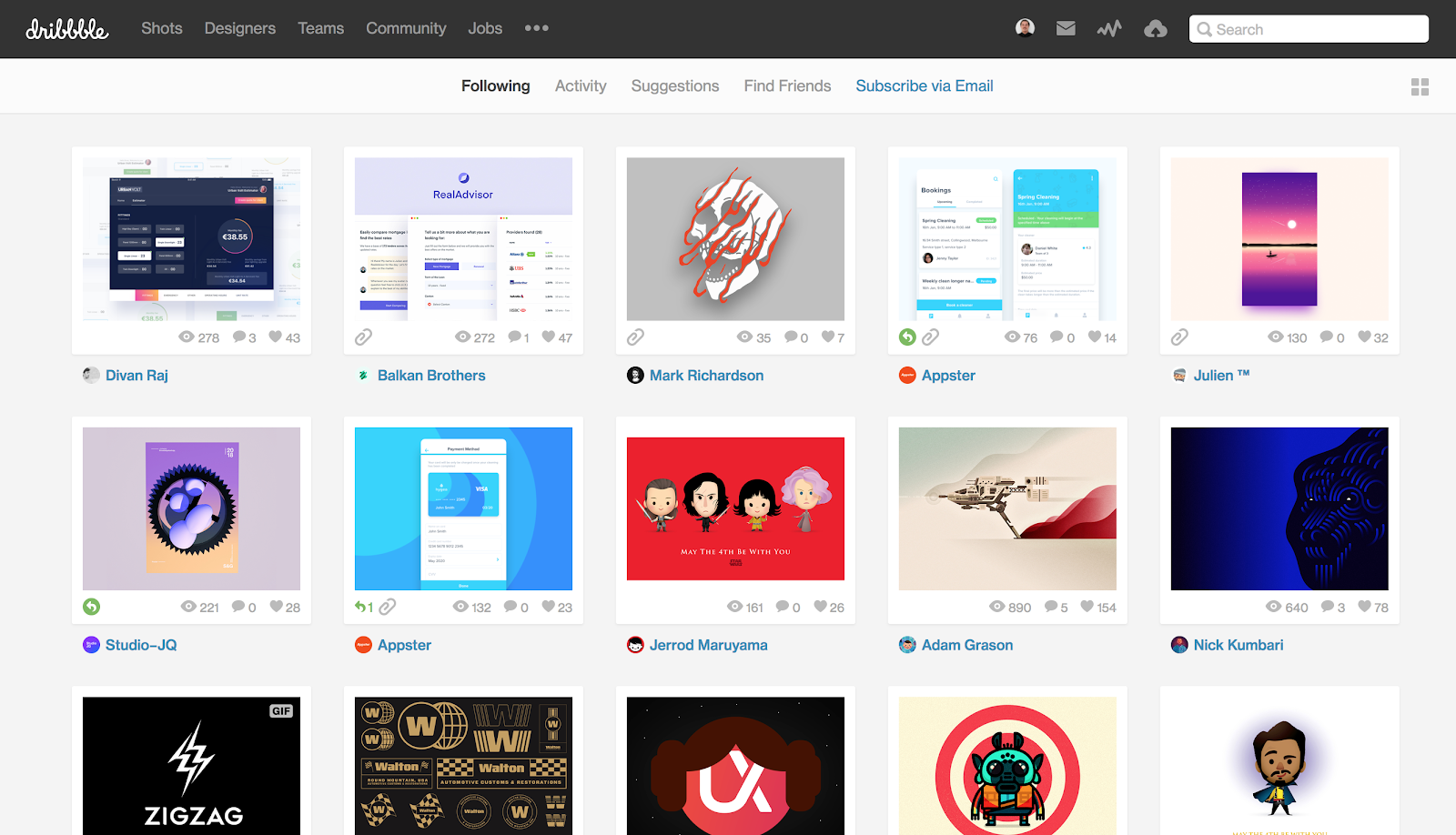
    A famous design platform, Dribbble has become the go-to website for design inspiration and my personal favorite. You can post your own design work if you are lucky enough to get an invite from someone already on the network. Some of the best designers in the world are on Dribbble and it is a plethora of inspiration for creatives of all types. Some of the great features are:

    • Bucketing shots into your own topics
    • Commenting on and discussing work
    • Seeing the color palettes used on the work
    • Jobs search
    2.Awwwards

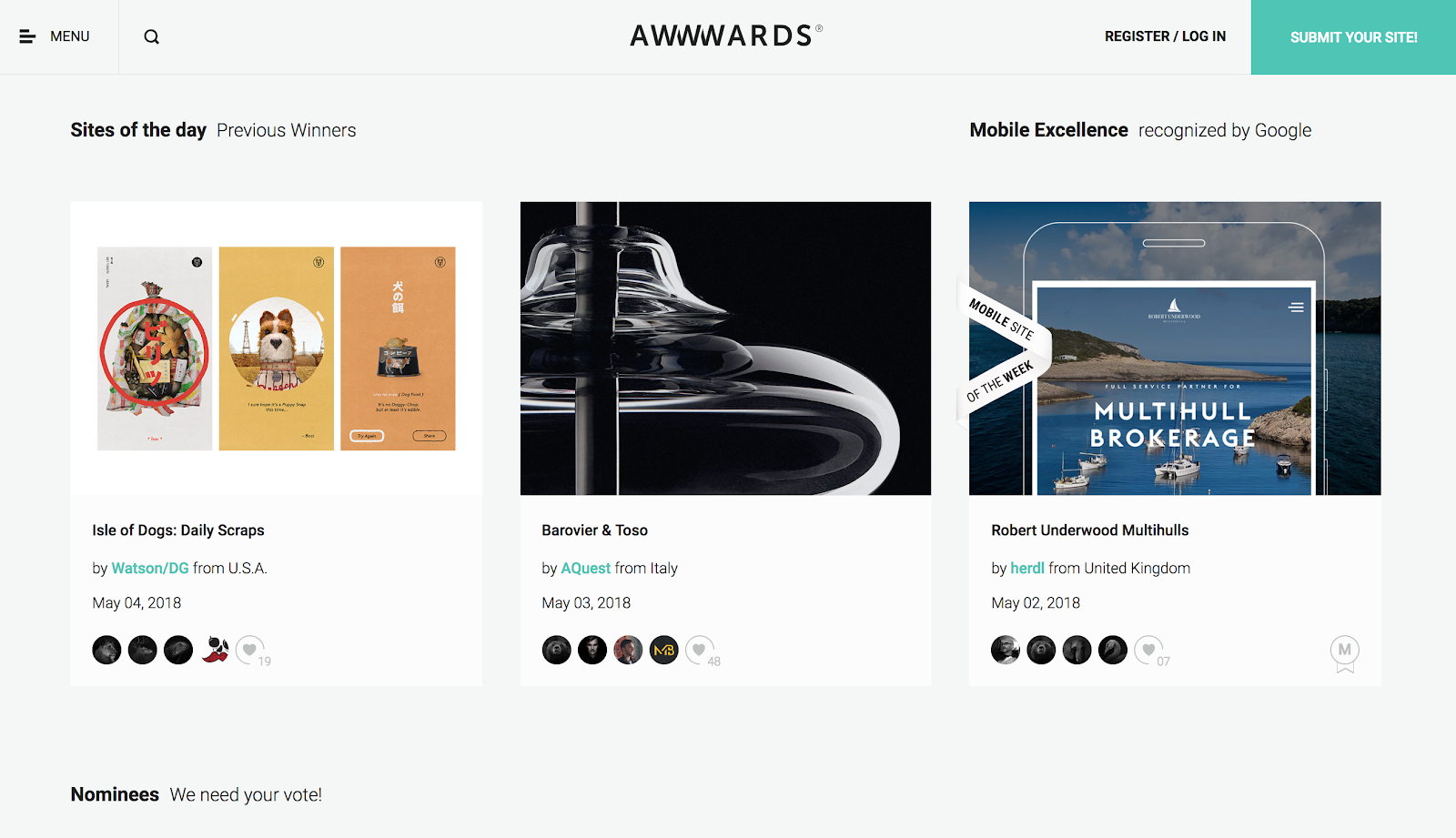
    Awwwards has some of the most cutting edges and up to date website designs on the internet. This platform is great to reference when you need inspiration on something different that breaks the mold in terms of design and development. Awwwards doesn’t feature your run of the mill cookie-cutter websites.

    Awwwards are rewarded for:

    • Sites of the day, month and year
    • Developers
    • Mobile excellence
    • Honorable mentions and nominees

    Read more: How to Do Usability Testing for Mobile Apps

    3.Material Design
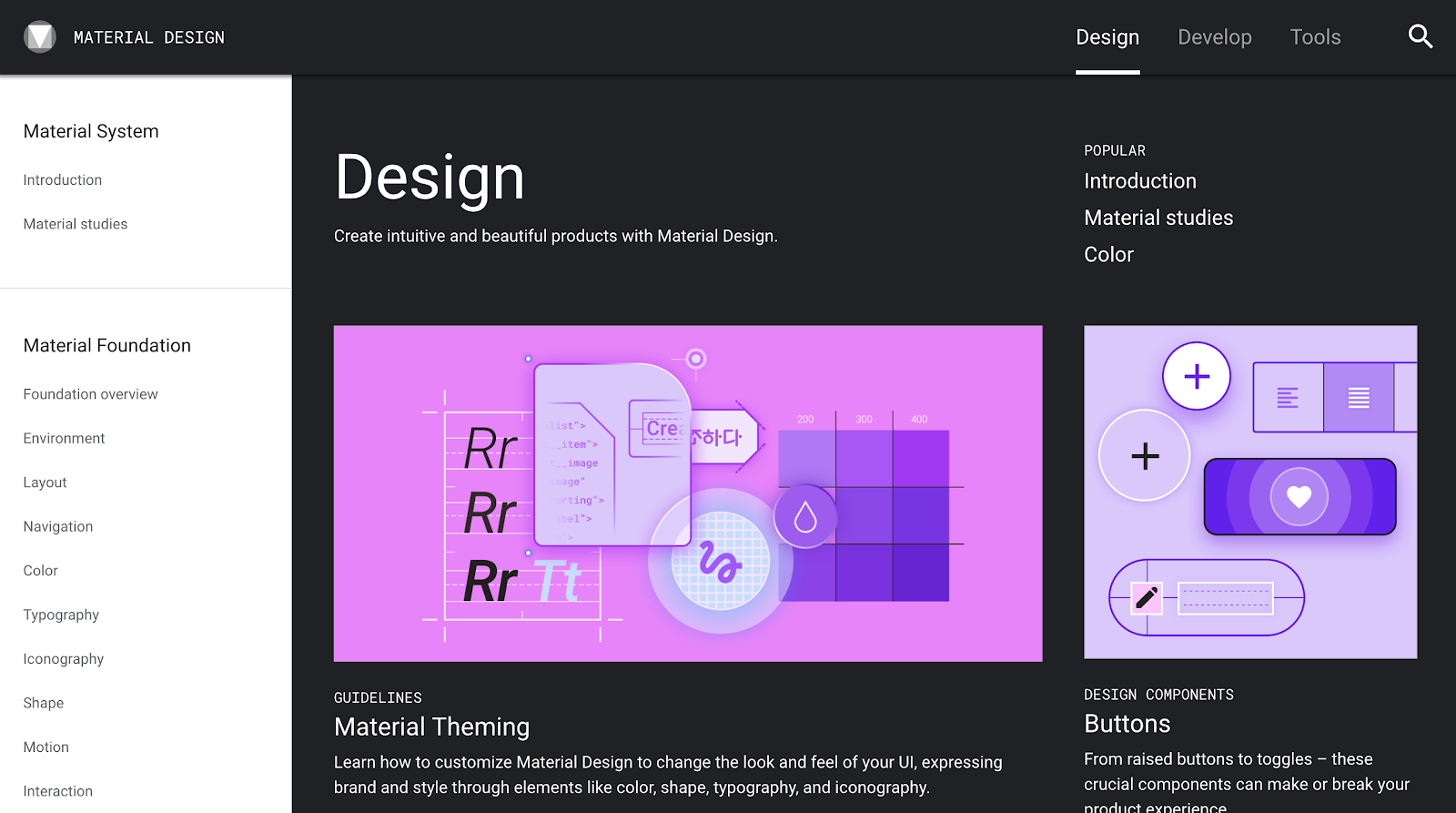
    Material Design by Google is not directly a reference website but it is a great resource for designers to use with many useful tools such as:

    • Gallery aka Googles version of Zeplin/InVision inspect
    • Custom color palette generator
    • System icons library
    • Design examples and case studies
    • Tutorials

    4.Behance

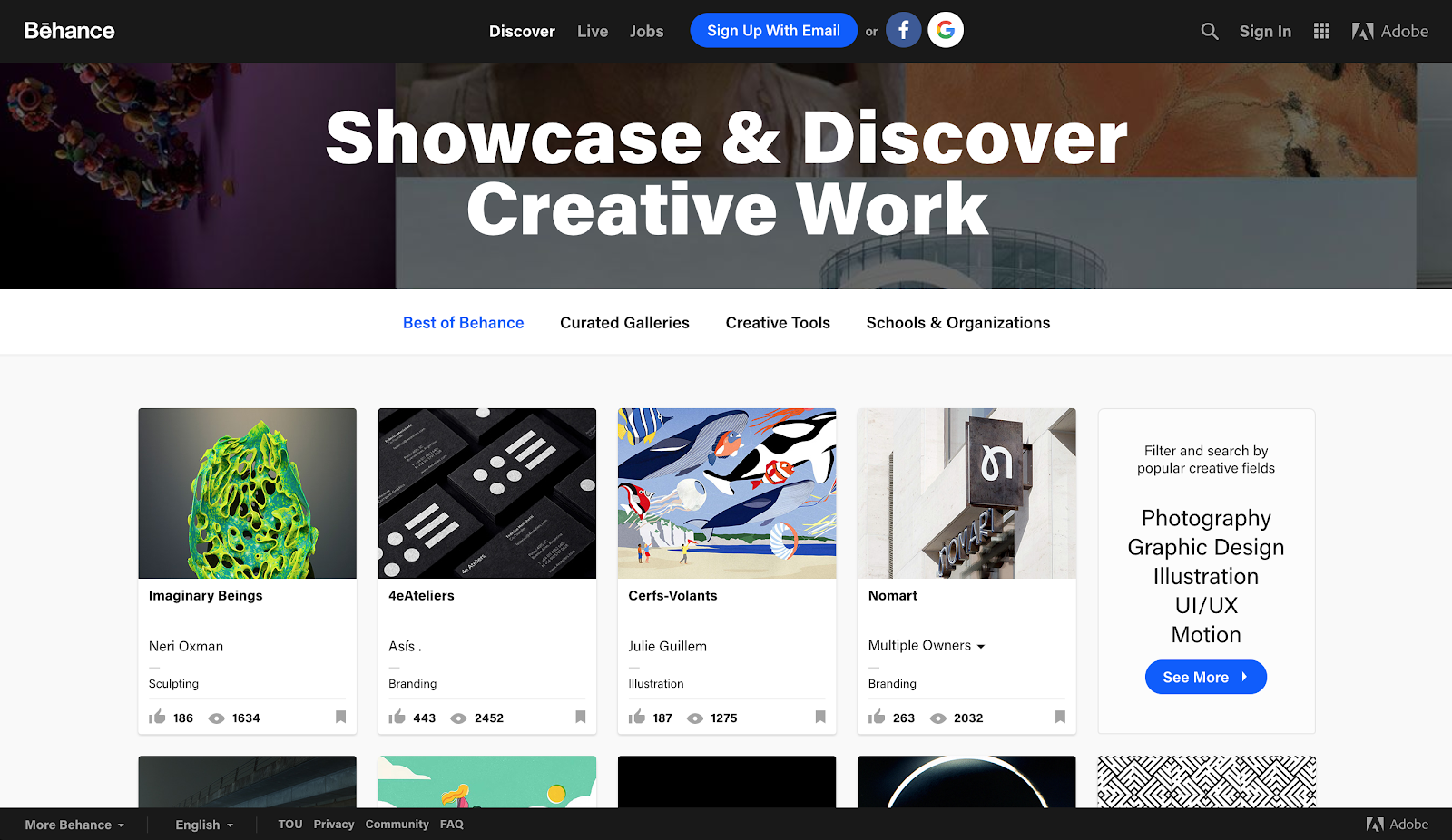
    Behance is a well-known platform in the creative industry. Some people choose to have a Behance portfolio over a traditional website and its integration with Adobe creative suite makes that a breeze. Behance is a great place to check out high-quality design work from around the world. You can save projects and follow creatives you like to keep up to date with work and design trends.

    5.Land-book
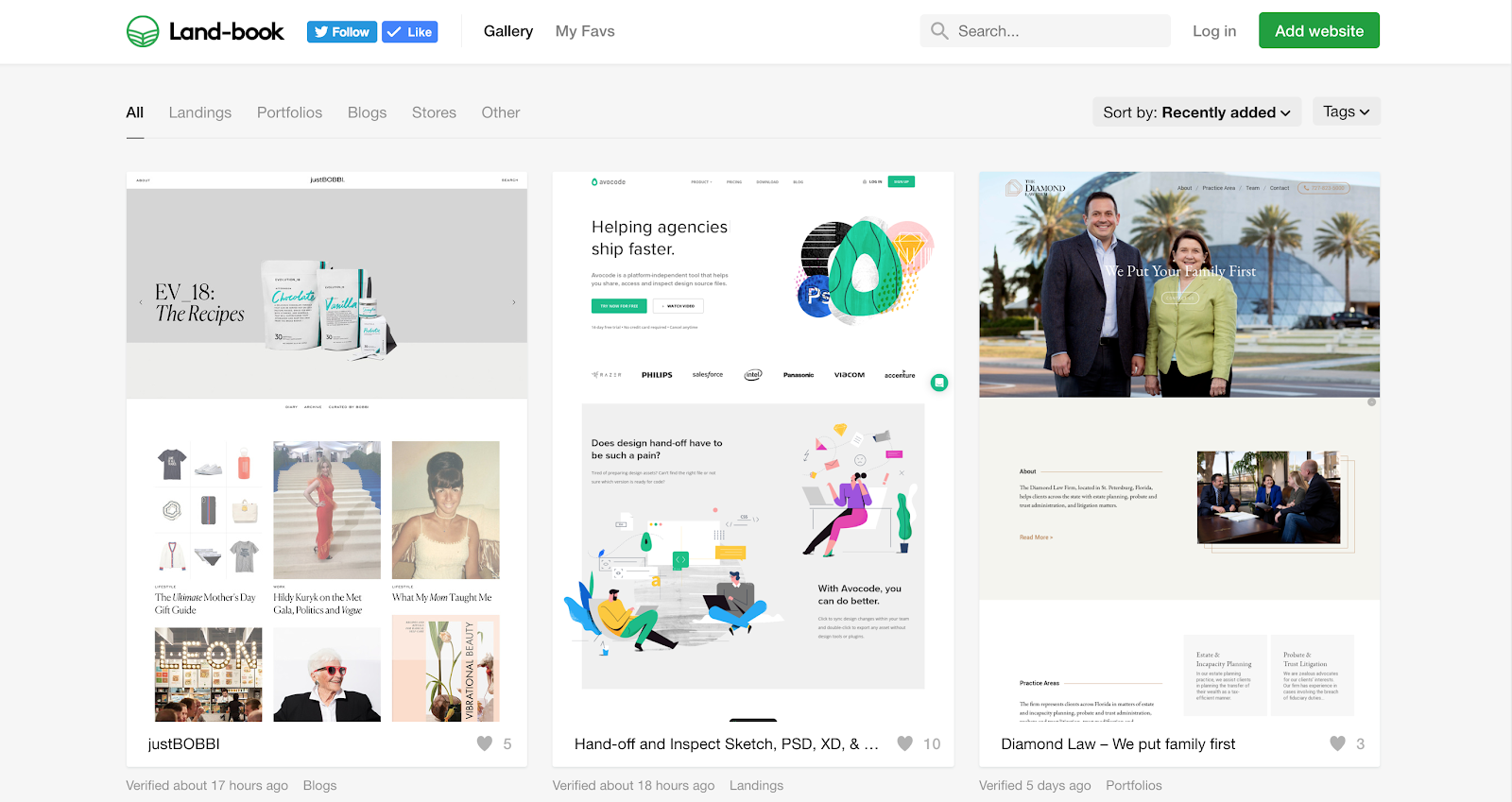
    Land-book is a place created for Designers, Developers, Product Owners, Marketing Managers, Startupers, Freelancers and, really, for everyone who appreciates fine designs and well-crafted sites. Land-book wants to inspire and support you in the process of creating your own unique website projects.

    6.Pages
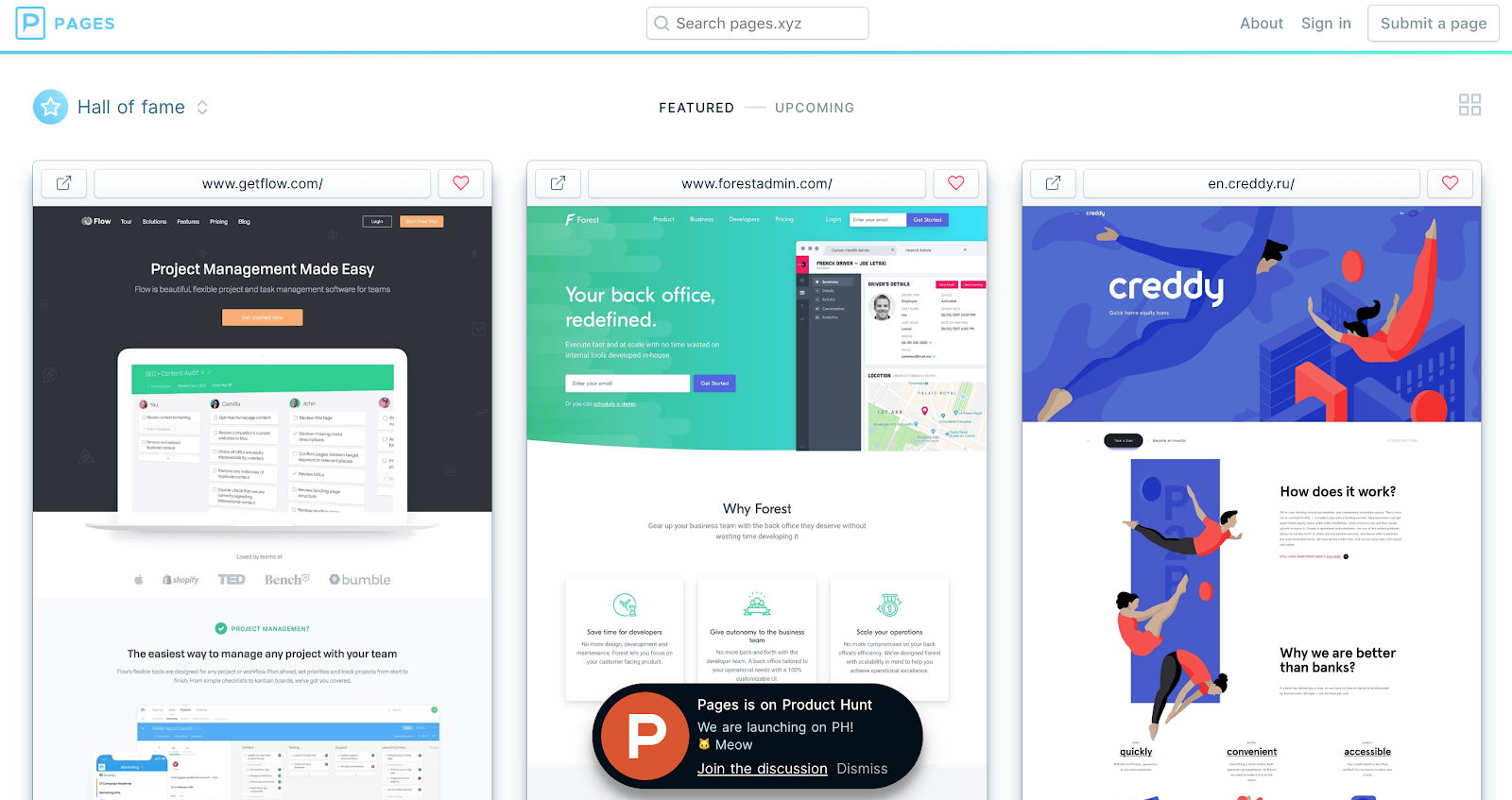
    This well-presented website demonstrates the best web designs broken down into sections called pages. The pages sort by pricing, product, landing, and app. Quickly and easily find inspiration for your next great design project.

    7.Site inspire
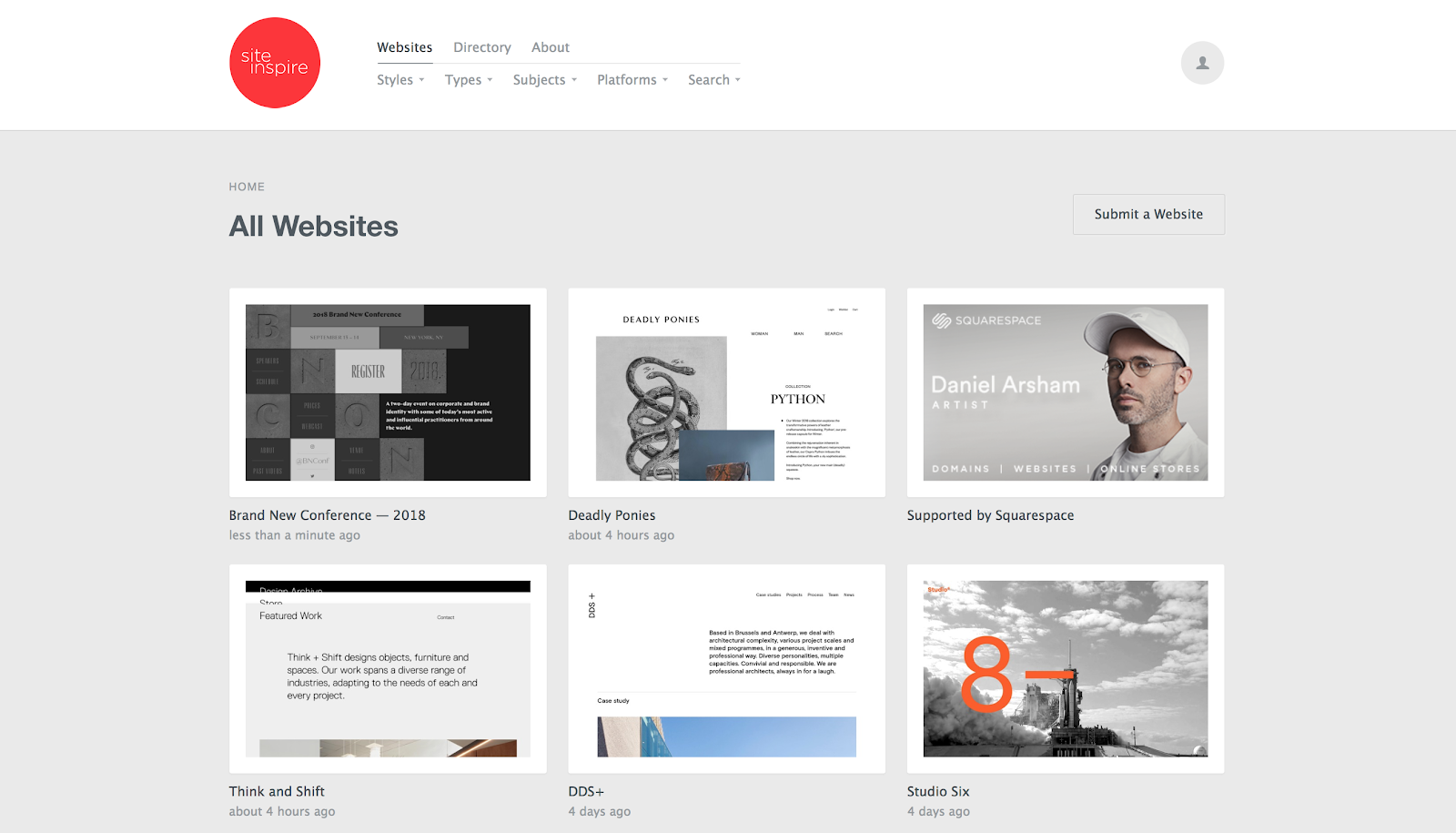
    A simple well-designed platform Site inspires showcases an excellent selection of websites and interactive designs. When you click into an image it links you into the live website which is a handy addition. Site inspire features a directory of the design agencies that are showcasing work should you need to contact them.

    8.The FWA

    FWA is where you go to experience cutting-edge innovation in user interface design and development. It’s a space that encourages the digital industry to push the boundaries of technology, to show people what is possible. They have an international team of over 200 judges (100+ men and 100+ women), who vote daily on submitted projects.

    Read more: The Fundamentals of UX and UI Design

    9.UI Jar
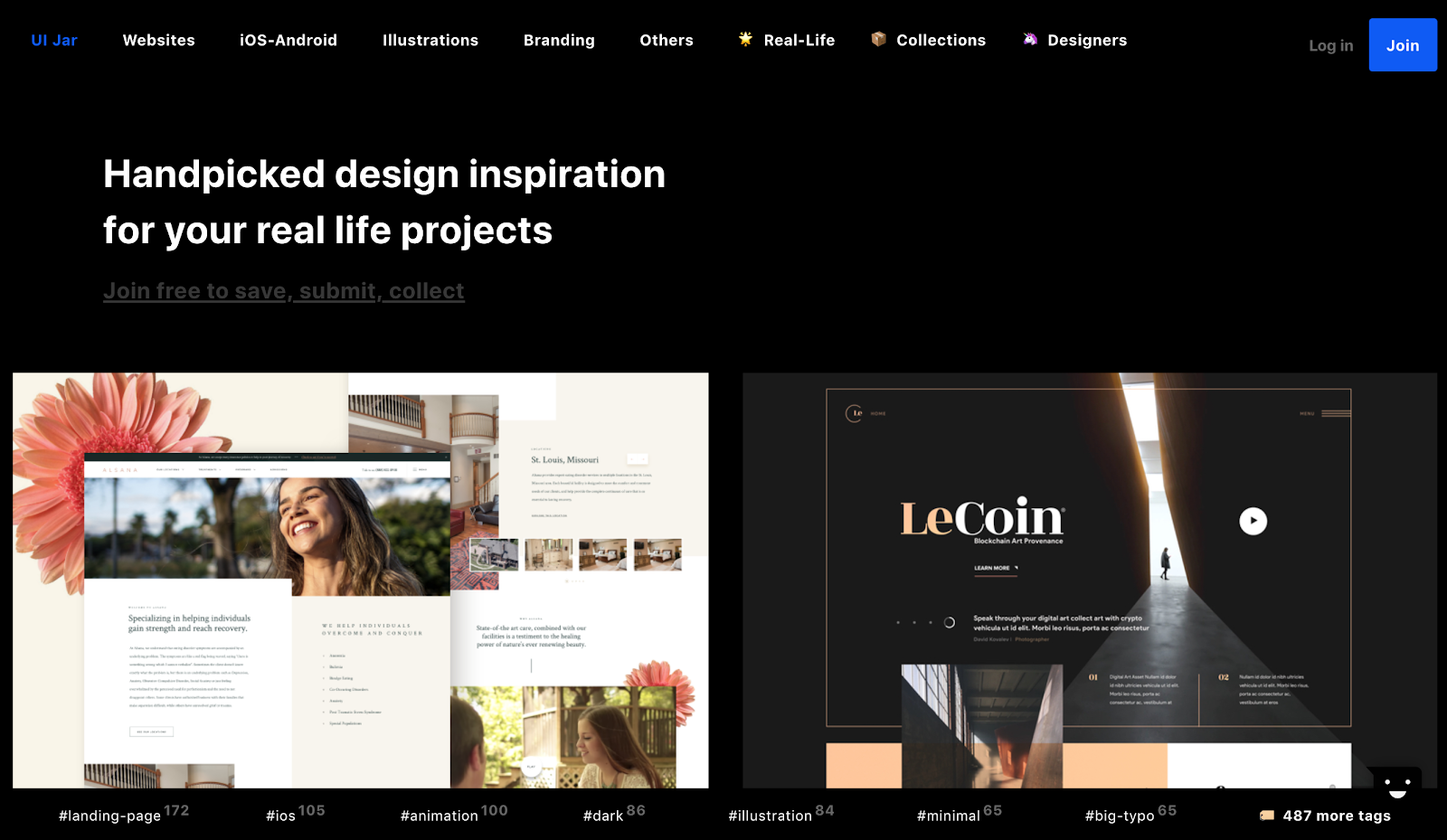
    Ui Jar features handpicked by designers for designer’s content from around the web. This is primarily for UI web and mobile designers. They have a nice section of curated collections that let you search for what you specifically want to see.

    10.Uplabs
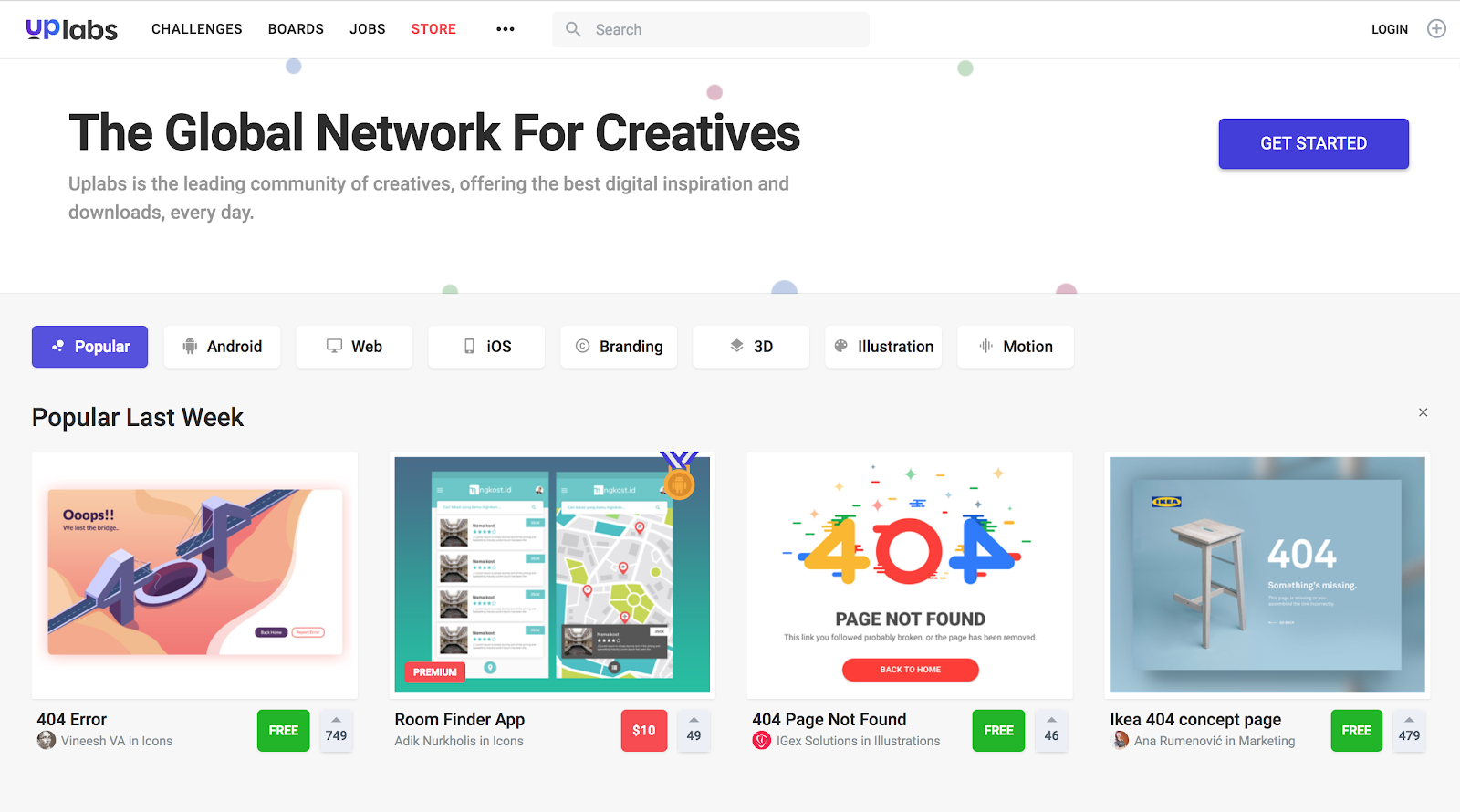
    Uplabs is the leading community of creatives, offering the best digital inspiration and downloads, every day. It also offers some good features like a design challenge section and a job board just in case you need a change.

    If you want to be the best at your design, you need to continuously hone your skills and let your creativity flow. Great design is rooted in inspiration. We hope that the design inspirational we’ve shared will help you in your journey as a designer.

    Sagara Technology can help you develop beautiful and functional interfaces for Website and Mobile Applications. At Sagara Technology we develop attractive, engaging, usable interface design that focuses on solving usability problems and producing outstanding results.

  • Affiliate Marketing and Its Benefits

    Affiliate Marketing and Its Benefits

    In internet marketing, there are many diverse and interesting ways of marketing a product . Starting from content marketing, social media marketing, to one of the marketing strategies that are currently viral, namely affiliate marketing. Affiliate marketing is a powerful marketing way to increase sales. Then, what is affiliate marketing? And what are the benefits for the company or a brand?

    What Is Affiliate Marketing?

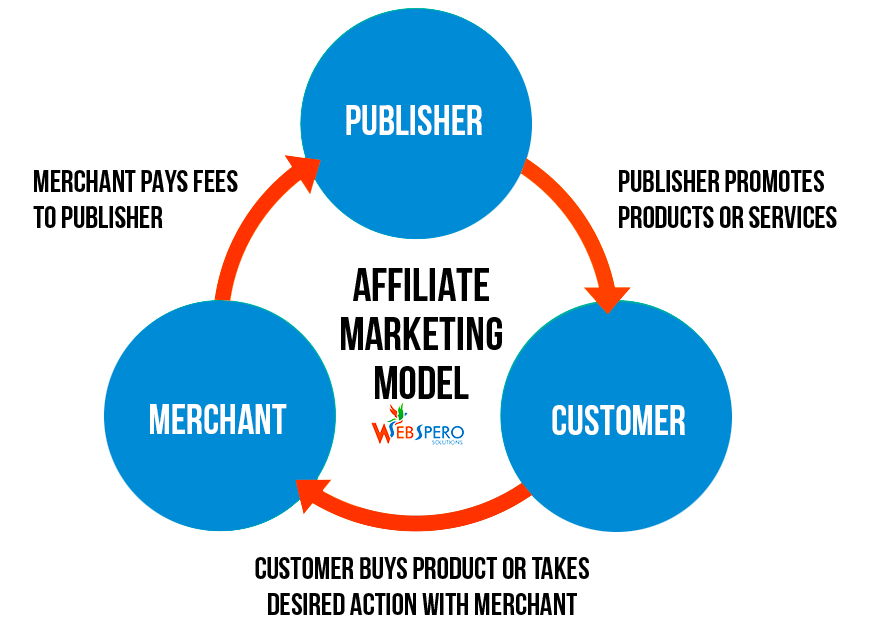
    Quoted from various sources, it was explained that affiliate marketing is a way for someone to get money from promoting a business product or service. Here, individuals or groups can partner with companies/merchants to earn commissions from promoting their products until they are sold to consumers. How affiliate marketing works or affiliate marketing only relies on an internet connection and can be done anytime and anywhere.

    Please note, in the affiliate marketing system there are generally three parties who play a role, including : 

    1. Affiliate

    Affiliates are parties who promote products. Affiliates or publishers will try to influence and invite people to buy a product. Now there are several parties that can be categorized as affiliate marketing such as bloggers, vloggers, influencers, YouTubers, and so on.

    1. Merchant

    Merchant is the party that holds the ownership rights to a product. Merchants can sell any product, either goods or services.

    1. Customer

    The customer is the party the affiliate is targeting as the target buyer for the product being promoted. The affiliate will get a commission (money) if the customer buys the product they are promoting.

    Benefits of Affiliate Marketing for Company / Brand

    Does the brand or company need affiliate marketing services? Of course, the answer is, yes. In today’s digital age, the role of affiliate marketing will boost sales and increase value to the brand. Not only that, there are many other benefits that can be obtained from the affiliate marketing method, including :

    1. Wider Market Reach

    The affiliate marketing method has a wider market reach and various characteristics. The reason is, the affiliate system is an open business so that it has the potential not only to reach the domestic market but also to foreign countries.

    1. Can Sell All Products

    As a brand or company, you can market various products with an affiliate marketing business. However, you only need to pay attention to the type of affiliate used so that you can maximize marketing. Do a promotion in accordance with what they understand has the potential for product sales to be successful.

    1. No Need for Employees

    The benefit of affiliate marketing for other brands or companies is that it does not require many employees. By using this affiliate business the company can cut the number of employees. In addition, you no longer need to pay large fees to pay sales and minimize marketing spending budgets. By only giving commissions to affiliates, your product can be known by the wider community. You can also just provide samples, affiliates will market them and your turnover will increase sharply.

  • Knowing Cloud Hosting For Online Business

    Knowing Cloud Hosting For Online Business

    The development of online businesses in the digital is increasingly complex with all kinds of supporting device needs. One of them is the need for a fast website that is useful for boosting marketing and increasing business sales. To accommodate this, cloud hosting services are the latest innovations that can improve website performance and the ability to accommodate high traffic.      

    Get To Know Cloud Hosting

    Cloud hosting is a technology that aims to maintain website performance by combining several servers to run like one whole server. Cloud hosting uses multiple servers to balance the load (load) and maximizes server working hours (uptime). Simply put, cloud hosting was created so that users can store data virtually by using many servers that are connected to each other.   

    Pros of Cloud Hosting

    Knowing what cloud hosting is, of course, you could say that this technology is equivalent to a Virtual Private Server (VPS). However, how to use a VPS tends to be more complicated and difficult, so people are afraid to use it. Meanwhile, cloud hosting, which has the flexibility of dedicated resources, can certainly accommodate thousands of traffic at one time and is easier to manage with Fully Managed services.    

    In addition, there are other advantages why you need cloud hosting for a business website, including :

    1. Can Acommodate Large Traffic

    It should be noted that the cluster technology in cloud hosting is well prepared to deal with a massive increase in traffic on websites. This is because the system’s backup resources will share the server load when there is an overload on one of the servers due to access to thousands or even millions of people simultaneously.   

    1. High Performance and Safe

    Cloud hosting services are equipped with various superior features that can help you build a reliable website. In addition, developers can also easily add resources when traffic is high and reduce them when traffic starts to return to normal. In other words, the website is faster, more flexible, and easier to customize.   

    Cloud Hosting Makes Business Better

    Cloud hosting technology is certainly developed with the aim of making your website better and making your business more successful in the future. This technology can be applied to all types of business websites, including Online Stores, High-traffic blogs, Project Websites, Company Websites, or News Portals. These websites both have a very high amount of traffic. So to maintain its performance, it can be overcome with a cloud hosting service that can minimize the possibility of server downtime. And what is clear, this type of hosting is relatively safer, especially when compared to shared hosting. Cloud hosting will help secure your online store and company website in the future. 

  • Get to Know a Cryptocurrency

    Get to Know a Cryptocurrency

    For those who are new to investing, discussing Cryptocurrency is a bit of a headache. Not finished learning about stocks or mutual funds, the world is now planning to adopt Cryptocurrency for payment instruments. However, you don’t need to worry. As long as you have the desire to learn and are always careful when making decisions, so your Crypto money investment will be successful. Well, before starting investing, it helps us know what Cryptocurrency is. The following is an understanding of Cryptocurrency and its brief history.

    What is Cryptocurrency?

    Reporting from various sources, Cryptocurrency is a digital currency that is used to transact virtually via the internet network. In addition, it is explained that Cryptocurrency is decentralized, which means neither party will be an intermediary in a transaction. Payments are also made directly between the recipient and the sender (peer to peer). To make transactions easier, Cryptocurrency also uses a blockchain platform. This needs to be done. A decentralized Cryptocurrency that requires a computer with high and sophisticated specifications.  

    The Beginning of Cryptocurrency

    Over time, Cryptocurrency appeared back in the 1990s and has only begun to become international prominence in recent years. There are several types of Cryptocurrency that are widely circulating, including Bitcoin, Ethereum, Litecoin, and Monero. Of all the cryptocurrencies, of course, the most popular is Bitcoin.

    Cryptocurrency Advantages

    Is Cryptocurrency really going to overturn paper currency? Of course, the answer is not certain. However, we can see what are the advantages of Cryptocurrency for the community. Here are some of the advantages of Cryptocurrency, including :

    1. Transparent

    Digital currency is designed as a transparent currency. Here, users can monitor transaction activity that has been carried out without worrying about losing money or the difference in amount. In addition, no other party can see the transactions you have made and vice versa. You can make financial transactions without the need to display your real identity which is a personal data security solution.

    2. Is Universal

    Cryptocurrency can be used by everyone without any binding regulations and conditions.

    3. Fast and Accurate

    With blockchain technology, the digital currency payment process can be done quickly, safely, and easily.

    4. Avoiding Counterfeiting

    Blockchain uses a system that does not allow two different transactions with the same currency. Therefore, this system can avoid counterfeiting.

    Until now, Cryptocurrency is still used only in terms of online buying and selling transactions, mining, and as a means for investment. Then, is it possible to replace paper money as a convenient means of payment in the future? The only time that can answer. 

  • The Importance of Employee Mobile Apps for Today’s Companies

    The Importance of Employee Mobile Apps for Today’s Companies

    Today, the mobile working trend has become increasingly popular since the internet is easily accessible. Smartphones apps are not only used for communication purposes, but also for work purposes. Additionally, employee mobile apps development is also becoming increasingly popular among corporations. With application development, managers to CEOs can efficiently monitor all conditions of the company anytime and anywhere. That is why every company must ensure that its company supports mobile access for employees and provides optimal employee communication.

    Building Application Systems to Company Needs

    In general, every company must also develop systems by building applications according to company needs. Both application development is carried out by in-house or using the services of an external IT vendor. There are things that need to be ensured in order for the application development to run well and company losses due to non-fluency processes can be minimized.

    1. The Main Purposes of the Application

    Make sure the purpose of the application development is clearly defined, to determine the needs for application development and what needs to be prepared.

    2. The Technology to be Used

    After determining the application development goals, the next step is to decide what technology to use. This depends on the apps to be developed. Whether the application will be specifically designed for mobile, desktop only, or both. Make sure your company use the right technology and can maximize the functionality of your application.

    3. Selection of developers, whether resource or vendor

    If you decide to use an external vendor, comparisons must be made by making a tender or pitching to find out the market price and quality required. Also make sure to make a work transparency agreement from the beginning so you will not be tricked by vendors, and to avoid data leakage.

    4. System Development Life Cycle (SDLC)

    It is a planning model used in project management, which can describe the stages involved in an information system development project. Starting from the concept and initial feasibility study to application maintenance that has been completed. Implementing SDLC in the development of this application will greatly assist the development and sustainability of application functions.

    5. Documentation on the Application

    Documentation on the application must be accordingly created to the application being built and always updated for further application development. Usually, the data documentation process is forgotten by developers who only focus on developing applications. Whereas, this is very important to be able to create integration between applications so as not to experience a difficult process in the future. For example, difficulty in finding data stored in which application database.

  • The Importance of Quality Assurance and its Maintenance for Digital Products

    The Importance of Quality Assurance and its Maintenance for Digital Products

    Thus, assuring the quality within the digital transformation cycle is essential for enterprises that focuses towards customer experience. If there is a miss in quality it would lead to huge costs of ramifications for the brand or service. Which is why Quality Assurance (QA) plays a key role in the transformation cycle because it allows enterprises to focus on maintaining their entire customer experience while at the same time ensure to deliver high quality applications or digital products with respect to funtionability, design, reliability, durability, & price of the product.

    Importance of Quality Assurance in Software Testing

    Quality Assurance in Software Testing (also popularly known as QA Testing)is defined as a procedure to ensure the quality of software products or services provided to the customers by an organization. Any company’s success after the digital transformation relies heavily on its customers, which is why QA focuses on enhancing their infrastructure, thus replacing existing redundant procedures and instead adopting more efficient and effective ones.

    In order to ensure the quality and stability that customers expect of an organisation, Quality Assurance and Testing teams need to:

    • Manage numerous applications, services and platforms to ensure smoother development of sophisticated products
    • Implement universal value chain automation that streamlines test execution
    • Blend integration tests into the overall app lifecycle, which cleans up a product from top to bottom.

    Both the digital and non-digital platforms in which the customers interact must be configured for functionality testing. Testing conditions must mimic user behaviour to ensure a well-defined and consistent customer experience. In order to automate and perfect the whole customer participation environment, QA teams preferably should repeatedly test automation on multiple platforms and operating systems.

    The whole process of creation, production, promotion, distribution and final delivery must cover QA and testing teams.

    How does Quality Assurance work?

    Quality assurance has a defined cycle called PDCA cycle or Deming cycle. The phases of this cycle are:

    • Plan: Organisations should plan and establish the process related objectives and determine the processes that are required to deliver a high-quality end product
    • Do: Development and testing of processes and also “do” changes in the processes
    • Check: Monitoring of processes, modify the processes, and check whether it meets the predetermined objectives
    • Act: Implement actions that are necessary to achieve improvements in the processes

    QA Contribution to the Digital Transformation

    1. DevOps Testing: DevOps is becoming an integral part of every organization’s strategy as it provides higher speed, frequency, and reliability while engineering products, applications, and solutions. The emphasis is on organizational resilience and fast delivery cycles with continuous integration and continuous execution.
    2. Cloud Testing: Cloud testing is a method to assess the performance and functionality of software applications implemented in the cloud environment. Simulated real-world network traffic is used to assess web applications implemented in a cloud environment.
    3. IoT Testing: IoT testing is conducted to ensure that IoT devices operate as expected and are able to connect successfully with other devices on the network. Testing these devices in a managed laboratory setting would be somewhat different from testing them in the real environment where they will be installed.
    4. Cognitive QA: Advances in artificial intelligence and machine learning have helped create predictions in the QA phase. This involves changes in the mindset of the company and the approach to user experience testing for the consumer. Cognitive QA is for the application of machine learning, statistical and prescriptive research strategies. The secret to cognitive QA is a self-learning and self-adapting environment.
    5. Chatbot Testing: Conversational apps or chatbots can transform the way consumers communicate with brands and companies. Many market leaders claim that conversational interfaces can replace websites and apps by using the most common means of human communication — dialogues.

    Maintenance in QA for Digital Products

    Whenever a new product goes live after a digital transformation, product owners are worried with how it can be maintained. In order to better understand how project maintenance works. One has to dig further into what has to be achieve after the work has been finish.

    There are many activities that need to be carry out while a commodity is alive, so that it is in what is consider a repair process. Understanding the essence of these activities is essential to the day-to-day operation of every digital product. They’re normally organize as follows:

    1. Preventive Maintenance: conduct routine activities that ensure the operating status of the program (e.g. security updates)
    2. Corrective Maintenance: refers to a situation that has affected the correct function of the system .
    3. Evolutive Maintenance: activities that fall beyond preventive and corrective maintenance.

    Quality Assurance is mean to verify if the product produce is safe for use. In order to achieve this, enterprises should have protocols to be adopt. It reflects primarily on the nature of the product/service that we offer to consumers before or after the deployment of the program.

    Read also more Sagara’s article here.

  • The Government’s Role in Encouraging Digital Transformation through Digital Talent Development

    The Government’s Role in Encouraging Digital Transformation through Digital Talent Development

    On this occasion, Sagara, who, this time, was represented by Mutiara Aulia, had the opportunity to hold a talk show with Hary Budiarto, the head of Balitbang SDM Kominfo, to discuss the role of the government in encouraging digital transformation in society.

    With the current pandemic, there are several advantages to the technology sector, especially in the digital transformation. During normal conditions, the estimated time to realize the digital transformation is around 3-5 years from now. However, with the pandemic, all sectors are require to carry out digital transformation.

    Government Readiness in Digital Transformation

    Live talk show at Sagara x Leaders

    Currently, technology continues to develop, and the industrial world has entered industry 4.0. It has caused people to enter the era of society 5.0, where in their lives, people have been using digital technology. There is also the readiness of the government factor in implementing digital transformation in accordance with the instructions from President Jokowi.

    1. Building digital Infrastructure Access, The government must build digital infrastructure in order for people to be able to enter and access the digital world.

    2. Preparing Digital Roadmap, In implementing digital transformation, the government needs to prepare a digital roadmap so that the digital transformation plan is more focused.

    3. Having a Data Center, The President has instructed to create a data center that could be accessed by the government and the public.

    4. Setting up Digital Talent, The President has asked to prepare approximately 9 million talents.

    5. The drafting of the law, Legislation is made to regulate people’s lives in the digital world.

    Referring to the fourth point on the government’s readiness for digital transformation, the government is preparing 9 million digital talents through the digitalent program. In the program, the concept used is the pyramid concept. Where the most basic thing is targeting the digital literacy of the community. Then in the middle there is a digital talent scholarship program in the form of trainings to improve people’s skills in the digital world. At the top is the digital leadership program, which is a program intended for leaders so that they are aware of the digital world and create synergy in this digital transformation.

    In order to produce 9 million digital talents by 2035, the Ministry of Communication and Information and other ministries work together to produce digital talents according to the targeted number and years. Kominfo creates a Digital Talent Scholarship program consisting of 8 academies.

    1. Fresh Graduate Academy

    This program is intend for students who are at the end of their study period as well as students who have graduate. The training provided is in the form of networking, big data, and artificial intelligence training. The training duration is 1 month, and training certifications are provided by international companies such as Cisco and Huawei.

    2. Vocational School Graduate Academy

    Technical Guidance for the Vocational School Graduate Academy (VSGA) Program is a national competency-based training and certification program aimed at SMK, Diploma 3 and 4 graduates who have not worked and have educational backgrounds in accordance with their respective training themes. The VSGA Program Technical Guidance which aims to produce talent / human resources at the technician level in the technology sector will be carried out offline. The choice of training themes in the VSGA Technical Guidance Program is Network Administrator, Web Developer, Mobile Programmer, Graphic Designer, Motion Graphic Artist, Multimedia Designer, Drivetester, Fiber Optic Installation and Activation Technician, Video Editor, and Data Management Staff.

    3. Professional Academy

    Professional Academy Digital Talent Scholarship (DTS PRO) is one of the academies of the Digital Talent Scholarship in 2021 which aims to improve the capabilities of skilled workforce in the IT field that is in accordance with industry needs. It is believe that the share of the ICT market during the pandemic is still strong compare to other sectors. The increasing use of ICT and internet devices, especially in the application of physical distancing, This is what encourages the ICT sector to still develop during a pandemic.

    4. Thematic Academy

    This program is intend for people with disabilities and migrant workers. The training provided is in the form of training for online selling.

    5. Entrepreneurship Academy

    The Digital Entrepreneurship Academy (DEA) Digital Talent Scholarship 2021 program. The program implemented by the Human Resources Research and Development Agency of the Ministry of Communication and Information Technology. It collaboration with Global Tech Company Partners, Universities, and Local Start-ups. The target of this program is to print new Digital Entrepreneurs (Digipreneurs) with a target of 22,000 people in order. It has to prepare superior Human Resources to face the era of the industrial revolution 4.0.

    6. Government Transformation Academy

    The Government Transformation Academy is one of the academies of the Digital Talent Scholarship in 2021. Which aims to improve the competence of ASN in supporting the acceleration of digital transformation in Government agencies.

    7. Digital Leadership Academy

    The Digital Leadership Academy is a training intended for leaders of an agency, in order to create synergy between elements.

    8. Talent Scouting Academy

    A program intended for those who excel in higher education. The talent is train to become a leader and intern at a foreign company before returning to college.

  • The Fundamentals of Cloud Computing

    The Fundamentals of Cloud Computing

    The term Cloud Computing may sound familiar in this digital age, not everyone fully grasps its essentials and characteristics. With the Internet revolutionizing most of our daily lives, it has been a driving force towards various technologies. That various have been developed, including cloud computing.

    To start off with, what exactly is the cloud?

    “The cloud” is a metaphor that refers to the delivery of computing services — including servers, data storage, networks, databases, analytics, intelligence, and software — over the Internet (hence “the cloud”) to facilitate faster innovation, flexible resources, and economies of scale.

    Before cloud computing, companies typically buy stacks of servers and hard drives. Companies host their website to keep it running and monitor the traffic. The downside of this is that the setup of these servers can be expensive. Troubleshooting problems may conflict with the business goals, bigger data storage is needed once the company grows. Since website traffic is varying, the servers will be idle most of the time.

    Rather than companies having to make significant investments in managing physical servers or data centers, train staff, and provide continuous maintenance, some or all of these needs are managed by a cloud service provider that handles the cloud computing efforts.

    How does cloud computing work, then?

    For cloud service providers, the two most common services that they offer include:

    1. Compute power — comprises three compute options
    • Virtual Machine: Cloud computing is possible due to a technology called virtualization as it allows the creation of an emulation that is remotely accessed through your computers. With virtual machines, there is no need to buy any hardware or install the operating system.
    • Containers: Similar to a virtual machine, however, containers do not require an operating system. Containers are already a package of applications and store their dependencies that later execute the application.
    • Serverless Computing: Breaks cloud applications down into even smaller components that only run when they’re needed.

    2. Storage

    • Cloud service providers take care of all your data storing needs.
    • Cloud storage is scalable.
    • If more storage is needed at a given time, you can simply pay more to expand the storage capacity.

    Benefits of Cloud Computing for Businesses

    Cloud service providers enable businesses to rent access to anything from applications to storage, instead of having businesses possess their own computing infrastructure or data centers. It’s important for businesses to shift their traditional IT resources to cloud computing services due to the benefits it offers for sustainability, namely:

    • Cost-effective: cloud computing provides a pay-as-you-go model, which means that you only have to pay for the resources that you use.
    • Scalable: Companies can increase or decrease the resources and services at any given time according to their needs, both vertically (adding resources to increase the power of an existing server) or horizontally (adding more servers that function together as one unit).
    • Reliable: Cloud computing authorizes businesses to have data backup, disaster recovery, and data replication services.
    • Security: Cloud service providers strictly implement policies, controls, and technologies that strengthen data, apps, and infrastructure protection from threats.
    • Elastic: Through automatic adding or removing resources, the cloud computing system will adjust for workload changes due to its high or low demand.

    Types of Cloud Computing: Cloud Deployment Models

    Clouds are establish in different models, types, and services that help companies offer the right solution depending on what the business need. The first thing to consider when determining the type of cloud deployment or cloud computing architecture that is going to be implement in the cloud services is the three different ways to deploy cloud services: on a public cloud, private cloud, or hybrid cloud.

    • Public Cloud: A service run by a third-party cloud service provider that may include servers in one or multiple data centers. Using virtual machines, individual servers are share by multiple organizations. Major hypescalers for the public cloud include Microsoft (Azure), Amazon (Amazon Web Services or AWS), Alibaba (Alicloud), and Google (Google Cloud).
    • Private Cloud: Refers to a cloud environment in a data center that is dedicate exclusively to companies or organizations who are concern with sharing their resources to the public cloud. Private clouds are implement on the servers own, manage, and accessible by the company through the Internet or private internal network.
    • Hybrid Cloud: Combines the public and private cloud. Hybrid cloud facilitates companies greater flexibility, more deployment options, and helps optimize your existing infrastructure, security, and compliance.

    Types of Cloud Computing: Cloud Service Categories

    After considering the deployment model for the company’s cloud environment, most cloud computing services fall into four broad categories: infrastructure as a service (IaaS), platform as a service (PaaS), and software as a service (SaaS). Often they are call the “stack” cloud computing because of how they build on top of one another. It is more convenient to achieve your business goals by knowing what they are.

    • Infrastructure as a service (IaaS): IaaS is the simplest option for businesses. Businesses migrate their hardware by rents the infrastructure and storage they need from the cloud vendor and then use that cloud infrastructure to build their application instead of purchasing and maintaining its own infrastructure. Example: Digital Ocean.
    • Platform as a service (PaaS): For businesses that want to build unique apps without significant financial investments through vendors in terms of building your applications like development tools, infrastructure, operating systems, PaaS is a popular choice. Example: Microsoft Azure, Heroku, Google App Engine.
    • Function as a service (FaaS): Overlapping with PaaS, FaaS is also know as the server less computer. The main idea of FaaS focuses on building app functionality so that it doesn’t continually spend time managing the servers and infrastructure. It breaks down the application into separate functions that run when triggered by some action.
    • Software as a service (SaaS): SaaS is the most frequently use cloud computing infrastructure which became the dominant way to access software applications for businesses. SaaS delivers its software applications over the Internet, on-demand, and applies a pay-as-you-go service. Example: Google Apps, Dropbox, Salesforce.
  • Why You Should Use AngularJS For Your Front-End Development

    Why You Should Use AngularJS For Your Front-End Development

    If you haven’t tried AngularJS yet, you’re missing out on why people say JavaScript is the most flexible language in the world.

    Most frameworks nowadays are simply a bundling of existing tools. They are an integrated toolset, but not very elegant. AngularJS is the most preferred framework for creating interactive components of a website. It was designed as a full-featured JavaScript framework to enhance simplicity and efficiency. Developers find this framework very effective especially in creating dynamic, single-page apps, and supporting MVC (Model View Controller) programming structure. As the business environments become highly competitive, it has emerged as a superhero because of its intuitiveness and rich features.

    Why is AngularJS so popular?

    By giving a wide range of functionalities, features, and benefits, AngularJS Framework has gained an amazing admiration for itself. So, these positive points have made it extremely popular for building web applications entering as a most useful service for front-end development. It is also rewarded in the list of top programming languages.

    AngularJS is a superior framework by Google launched in 2009, which is created to make the front-end development procedure easier to manage. So, despite the countless plugins and frameworks obtainable in the marketplaces, website owners pick that development services because of their advanced features.

    The main features of AngularJS

    The main reason that AngularJS has gained a lot of popularity is its unique features. The features make app development easy and result very intuitive. These features include:

    Two-way data-binding: Data binding is one of the most notable AngularJS features. This feature helps save the developer from doing a lot of coding. In any app, 80% of the code base is dedicated to manipulating, traversing, and listening to DOM. However, data-binding in AngularJS helps to reduce the work so that the developer can concentrate on the app.

    Ready to use templates: The AngularJS is simply plain HTML. The browser parses these templates into the DOM and transforms them into the AngularJS compiler. Then, the AngularJS Framework traverses the templates to get rendering instructions called directives. The ready-to-use templates make it easy even for people with little computing skills to come up with great apps.

    Dependency injection: This is an essential feature in AngularJS that makes the developer able to ask for dependencies as opposed to making them on his own. Think of this feature as a way of saying I need X and not starting to make X.

    Testing feature: The AngularJS developer team worked with a special focus on testability in mind. This means that you can easily test apps.

    Pros of Angular apps

    The regular Angular updates have particularly made developers, and users get a special attachment to their apps because of enhanced security and features. Here are additional pros of Angular apps.

    Time-saving: Projects that previously used to take many months with other frameworks can now be completed faster with AngularJS. All that framework requires is splitting the app into several MVC components. From there, the framework takes over because you do not require additional coding.

    The app is easy to learn and get started: Getting up and running with that is perhaps the simplest thing a developer can imagine. Simply include some attributes into the HTML, and you can complete the first app in a couple of minutes.

    Data Binding in AngularJS is very easy: Can you remember trying to create a text property on a model that requires binding to your app UI? It is very difficult with most frameworks. That stress has been eliminate in this. In fact, you can see the ultimate results as you type in the span.

    A declarative expression of UI: Because a UI with AngularJS is fully structure, understanding and manipulating the components is very easy. Even though designers are not developers, they can also easily learn markups. This means that the declarative expression of the app User Interface will make more sense for the entire team.

    Affordability: Because AngularJS is an open-source framework, developers can come up with custom apps at lower costs.

    The fast-evolving business environment demands that investors and managers take a proactive approach to meet the market demand. Because of their crucial role in linking your business, service, or product to the target market, front-end apps are the ultimate tools to help you win the target market and outdo the competitors. To come up with top-notch apps, you could contract an AngularJS development company or hire an AngularJS developer. Picking the right AngularJS development services provider will help you to get customize apps and guarantee faster business progress. With AngularJS, you can never go wrong.

  • Tips for Setting Up a Startup from The Korean Drama “Startup”

    Tips for Setting Up a Startup from The Korean Drama “Startup”

    From the Korean Drama Startup story, there are a number of business tips in building a startup technology. Anything?  

    Prepare a Business Model

    No matter how sophisticated your startup technology-based service is, if you don’t have a business model, it will be difficult to attract investors. Especially if you really start from scratch and have no relationship. Not only that, the business model must have a clear source of income.  

    Choose a Competent CEO

    The CEO plays an important role in startup development , especially when it comes to attracting investment – that’s the lesson in the Startup drama . Because the CEO is the one who will explore the investment agreement with the potential investors.  

    It doesn’t have to come from the technology or service fields that your startup is making. The important thing is that he has qualified abilities, such as being able to see business opportunities, being adaptive, persuasive, and being able to make decisions by considering all risks.    

    Enter the Competition

    In addition to preparing a business model, early stage startups should participate in various competitions. Not only to get prizes, but also to expand relationships as well as find potential investors.  

    Join the Incubator / Accelerator Program

    Joining an incubator or accelerator program can also help you build a startup . In the program, you will acquire various business knowledge, create service prototypes, and have the opportunity to meet potential investors, while receiving assistance from mentors. 

    Compile the List of Shareholders Wisely

    In the Korean drama Startup , the character Han Jipyeong, who works as an investor, suggests that the Samsan Tech startup should not share the company’s shares equally. In the early stages, it’s good that the percentage for CEOs is greater than for the rest. Because, in the future, if there are new investors, the company will have to sell a number of shares according to the agreement.   

    Study the Investment Contract Well

    When investors interested in investing in your startup get to the negotiation stage, you need to study the contract carefully before agreeing to it. If there are things that you think are detrimental to the company or team, then discuss them in negotiations with potential investors; so that both parties benefit .  

    Continue to Research and Innovate

    Innovation can differentiate your product from competitors. In fact, you can even give birth to new products from research-based innovation.

    If the product is mature, take part in the tender 

    When your products and business model are stable and get recognition in the industry, participating in tenders can be one way to develop a startup business . Moreover, if the tender is on a large scale. However, don’t forget to also consider your startup capabilities , huh.   

    Scale Up

    If you think your startup is ready to scale the business, open funding round to attract new investors. Don’t forget to set a nominal target for your startup funding round.