Author: Sagara Technology

  • How Digital Marketing Works and Concepts

    How Digital Marketing Works and Concepts

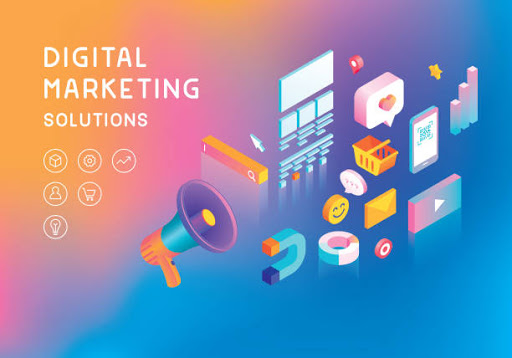
    Digital marketing works is a series of marketing activities using digital media. This will work for businesses that have gone online, for example, have a website or a marketplace account. All of these things will be optimized using digital marketing. Without this digital marketing is not able to achieve its true marketing goals, for example increasing sales or service users.

    In general, digital marketing can work organic (unpaid) or paid marketing (paid).

    How Digital Marketing Works

    Build a Website or Marketplace account for the business to be promoted

    As stated above, a website or marketplace account is something that is promoted using digital marketing. Because the website or marketplace account will display the actual product or service.

    Make a post on the website or Marketplace account (Organic Marketing)

    This post can be an article post or a product catalog that has a specific URL. This URL will be linked to the ad displayed using digital marketing.

    Digital marketing advertising media (Paid Marketing)

    There are many digital advertising media ranging from social media such as FB Ads, search engines such as Google AdWords, and others.

    Conduct market analysis (Paid Marketing)

    The market analysis largely determines the performance of the ads that appear and the targeting of ads to generate the right ad audience. In addition, it can also save the advertising budget.

    Create attractive advertisements by linking the website or marketplace posts (Paid Marketing)

    Attractive ads will make the audience pay special attention to the ad, such as reading, clicking, to buying products. The more attractive the ad, the higher the audience interaction when viewing the ad.

    Advertising publications (Paid Marketing)

    After all the steps above are ready, then the ad is published using the budget that has been determined. Each advertising medium requires different costs and different performance.

    Generate customers from those ads

    The real goal is to generate customers from the ad. You will see changes that occur, ranging from businesses that are getting known, website visits increase, reputation gets better, to an increase in sales of goods or services.

    Digital Marketing Concepts to Help Online Business

    Finding new customers online

    Many people are online every second. These people have the potential to become customers of an online business. By using digital marketing, online businesses can reach these people.

    Selling products or services through a website or application

    As stated above, digital marketing will optimize websites or applications owned by online businesses. So that the actual marketing goal can be achieved, namely selling products or services.

    Delivering targeted advertising to customers

    Digital marketing can reach a targeted advertising audience, meaning that ads only appear to the right people. For example, people looking for laptops will see a laptop ad.

    Learn more about what customers like

    By using digital marketing, online businesses will better know what customers like. Digital marketing can analyze customer behavior, which ads they open often and generate more consumers.

    Using marketing analytics to strengthen online sales

    Marketing analysis in the field of digital marketing greatly affects the performance of the ads created. There are many methods and research tools that can be used, such as looking at market trends using Google Trends, analyzing online sales data, and others.

  • Tips to Improve User Experience Design

    Tips to Improve User Experience Design

    User Experience Design (UX) is the process of increasing user satisfaction (user apps, website visitors) by improving the usability, accessibility, and efficiency of user interaction with the website or apps. The point is that UX Design helps in making a website or application that you make is easy to use and not confusing when used by users.

    To improve it, here is the list of User Experience (UX) Practices tips every web designer should follow:

    1.Flow

    First, we need to think of a website as a yellow brick road that can move users seamlessly from one section to the next by understanding user personas’ goals and needs. In order of importance, items near the top page of the page would likely attract users. You can also create consistent and easy-to-use web interfaces, avoid dead-end pages, use common patterns and interfaces to help customers understand the web without creating additional work for the users.

    2.Scrolling

    As long as it is clear that additional or relevant information is below the fold, your website provides a strong visual direction, and it is a sufficient web page (not too long), it is a high chance that the user would scroll down your page to the bottom since scrolling web pages is faster than clicking anyway.

    3.Contrast and Color

    Make sure that color-blind users could read your website and be aware of the mobile website’s contrast or color in general.

    4.Loading

    Make sure website users can complete their primary goals quickly and easily. The load time, load behavior, waiting times, and smoothness of animations could influence the users’ perception.

    5.Mobile

    Make sure users can interact with a single touch, determine whether users will use devices with one hand or two when designing mobile layouts, or knowing the minimum size for a touch target on mobiles could help you understand the interface targets.

    6.Readability

    Use visual variety and meaningful text, pay attention to the font; make sure it is a mobile or a phone-sized, not too much ads banner, avoid all caps.

    7.In general

    Always have a search field, a clickable button design, a simple icon, and has an obvious purpose of the web page. Try to eliminate redundancy, be a positive, and user-oriented website. You can also re-read your website or research similar options, terms, and messages. More Here

  • The Fundamentals of UX and UI Design

    The Fundamentals of UX and UI Design

    Many people have heard the term “User Experience and User Interface ” but not everyone knows what this means. UX Design refers to the term User Experience Design, while UI Design stands for User Interface Design. Both elements are crucial to a product and work closely together. But despite their professional relationship, the roles themselves are quite different, referring to very different parts of the process and the design discipline. Where UX Design is a more analytical and technical field, UI Design is closer to what we refer to as graphic design, though the responsibilities are somewhat more complex.

    UX and UI are rapidly growing and revolutionizing how people interact with the world around them. It’s why the internet evolved from Geocities homepages with blinking “Under Construction” signs to the sophisticated interfaces used every day.

    (UX) User Experience

    User Experience (UX) is the process of enhancing customer satisfaction and loyalty by improving the usability, ease of use, and pleasure provided in the interaction between the customer and the product. User experience is practiced by UX designers — but also product managers, product designers, entrepreneurs, startups, and forward-thinking organizations.

    Wikipedia

    The Four Key Elements of the UX Process:

    1. Behavior

    UX designers work with people by learning about their habits and goals, identifying needs and constraints, and aligning with existing behaviors to create solutions that are easy to use (efficient) and solve a real problem (effective).
    Some UX methods and tools used to learn about user behaviors:

    • User interviews are one of the most important ways that UX designers uncover information. User interviews usually focus on qualitative data, which is information that can’t be measure but that is rich in emotional detail.
    • A customer journey map is a visual document that details a user’s interactions with a company or product and how they feel about each interaction.
    • A task analysis is used to analyze how users perform tasks in order to achieve a goal. Through observation, designers learn about the user’s current process (and work-arounds if no solution exists).
    • Designers are always documenting, analyzing, and communicating user insights and data with their team to keep everyone on the same page.
    • Finally, they might create a user persona to bring this user data to life and communicate findings with their team.

    2. Strategy

    Strategy in UX is also about understanding where an existing product or process can be improved and communicating this effectively to internal teams and external users through design. Fundamentally, UX is about design empathy, which means translating user needs into actionable solutions.

    One of the first steps in UX is user research. In order to solve a problem, a designer first needs to observe and understand what’s happening from the user’s perspective. Asking questions is a great way to uncover a lot of information about user needs and frustrations. These user insights can then be translated into design solutions that solve the user’s problem efficiently and effectively.

    Some great questions to ask when strategizing:

    • Who is our user?
    • What is the user’s motivation or goal?
    • How does this make them feel?
    • Is the process clear?
    • What do they expect when they click this?
    • Are you assuming something about users? How could you test this assumption?
    • Are you thinking of the user’s wants and needs, or your own?
    • What do we want users to do?
    • How are we helping them do it?

    Strategy is then translated into design through artifacts such as user flows (how a user moves through a system to achieve a goal), wireframes (schematics that show how a digital interface will look and function), and high-fidelity prototypes (a working model of a design) that can be tested with users.

    3. Usability

    Good design is ultimately determined by usability. If a design doesn’t help the user solve a problem, it is not a good design. It is also a bad design if the user is confused and doesn’t know where to navigate. Because design is about functionality, usability is more important than aesthetics.

    While designers talk a lot about designing for “delight,” the best designs are usable. Designers can add delight through sophisticated animations, friendly language, and unexpected surprises that anticipate users’ needs. However, if the design is not usable, all these delightful details don’t matter. This may seem like a simple practice in theory, but that’s not always the case.

    Usability is about creating products that anyone can use, especially if they have a disability or impairment. Usability is also about accessibility, which means that physical constraints or disabilities don’t prohibit or impede someone’s use of a product or service. Good design is about helping humans.

    4. Validation

    Finally, validation is a critical piece of the UX process. Ideally products need to be tested with users before they are deployed to the public. Unfortunately, this is not always the case with companies that are eager to launch their products out into the world. The UX process emphasizes testing with real users early and often in order to ensure that the design solves the right problem.

    Solving the right problem is the most important task that UX designers face. However, testing often throughout the process also means that you’ll catch mistakes sooner and be able to adjust without losing users. When things don’t work or are difficult to use, most people give up.

    There are many ways to validate an idea or assumption, depending on the amount of time and money you can invest in the project. The important thing to remember with validation is that it removes the guesswork from the design process.

    (UI) User Interface

    User Interface (UI) is the design of user interfaces of machines and software, such as computers, home appliances, mobile devices, and other electronic devices, with a focus on maximizing usability and user experience. The goal of user interface design is to make the user’s interaction as simple and efficient as possible, in terms of accomplishing user goals (user-centered design).

    Wikipedia

    A key reason for the recent surge in focus on UI design is that Google is now rewarding ‘points’ to sites that offer the best ‘User Experience’. As they result in better rankings, this has become a new focus area for several enterprises. The other reason is the emergence of mobile devices as a tool for surfing the internet, the smaller sizes of the mobile screens which are impelling designers to be careful regarding the navigation in between text and the layout of their design. A UI Sketching Toolkit with ready-to-use templates will help you design your user interface on various devices.

    Primarily, User Interface focuses on the anticipation of user’s requirements and ensuring that your interface has the right tools to support their actions.

    User Interface design fundamentals in while creating a UI design:

    1. Pick the Right Interface Elements

    Users have now increasingly become aware and familiar with interface elements acting in a certain way, so it is essential to be consistent and predictable in your choices and their layout. This will help you complete the task with efficiency and satisfaction.

    Typically, interface elements include:

    • Input Controls: The include buttons, text fields, checkboxes, radio buttons, dropdown lists, list boxes, toggles, date fields.
    • Navigational Components: pagination, slider, tags, breadcrumb, search field, slider, icons
    • Informational Components: tooltips, icons, progress bar, notifications, message boxes, modal windows.

    2. The Best Design Practices UI Design

    When designing for UI, design fundamentally depends on fully knowing users, and that includes knowing their preferences, tendencies, skills as well as their goals. This step is a critical one because once understand the habits of user, it becomes easier to pick the appropriate interface design elements as mentioned here:

    • Keep the interface simple. The best kind of an interface is one that is as good as ‘invisible’ to the people using the interface. Best to be clear in the language on all the labels, and in the message.
    • Be consistent and use expected regular elements. The use of the regular, known elements in the UI design is critical. Over time, your users tend to get comfortable and are thus able to use the site more efficiently.
    • Be careful when choosing the page layout. Placing these components carefully on the page that can help draw focus to the important informative segments and interactive elements.
    • Use color to attract. The appropriate use of textures, shades, and colors can help you focus attention toward, as well as redirect attention away from design elements of low significance.
    • Use typography for clarity and hierarchy. Using different types of fonts, sizes, and headers can imply a hierarchy in your design, making it easier for the reader to understand the undertone of your UI interface.
    • Give feedback. It is critical to keep your readers abreast of updates or changes in your UI if there are any.
    • Ensure defaults are displayed.Some defaults, such as subscriptions, pop-ups, and escape zones must be clearly displayed in the design.
    • Give more power to the users. It is essential to shift power to user hands. Let users work independently and divide their actions into units so that they won’t get distracted along the way. More Here.

  • Fintech Challenges 2021 in Indonesia

    Fintech Challenges 2021 in Indonesia

    Fintech in Indonesia in its development, especially during this pandemic, looks positive. Statistical data from the Otoritas Jasa Keuangan (OJK) stated that the total distribution of fintech grew 113.05% to Rp128.7 trillion until the third quarter of 2020. In addition, the accumulation of borrower accounts also grew by 103.46%, or to 29.21 million. Thus, public interest in making loans during the pandemic through fintech in 2021 will grow.

    4 important transformations will occur in 2021. The four things are as follows:

    The Effect of Covid-19 Will Continues To Influence Consumer Behavior

    The spread of Covid-19 has forced people to reduce their activities, including transactions that have gone digital. OJK data in 2020 stated that e-commerce transactions increased by up to 400% per month during the pandemic. So that in 2021, cashless payments will become a necessity and digital wallets will become a habit.

    Big Data Management Determines Fintech Success in 2021

    With the help of the cloud, machine learning, and artificial intelligence, fintech can build systems with real-time data. The Fintech industry can collaborate with IT developers in extracting data so that it can be read quickly and accurately or build their own software and financial data algorithms that suit business needs.

    2021 Is the Beginning of the Development of Integrated Fintech Services

    People who want to borrow money, shop online, read market trends and make financial records can be done using one application. In 2021, there will be more Fintech business players who focus on connectivity between services and building a more reliable verification technology system.

    Financial Inclusion Becomes the Main Focus of the Government and Fintech Actors

    Data from the National Financial Inclusion Survey (2018) shows that there are still many people who are not yet connected to the banking industry. Financial Inclusion Insight (FII) data and the National Financial Inclusion Strategy (SNKI) show that the number of account ownership per year in Indonesia has increased, but is still not as high as neighboring countries, such as Malaysia and Singapore. More Here

  • Fintech Services and Regulations in Indonesia

    Fintech Services and Regulations in Indonesia

    Fintech services, even for people who already have access to banking, fintech still provides convenience. It is easier for people to make financial transactions. Financial transactions that were originally made with cash or using a debit or credit card, can now be done by tapping the QR Code using a smartphone. Payment transactions, money transfers, fundraising, loans to investment management can also be done easily and practically using technology.

    What is Fintech?

    Fintech or financial technology is synonymous with start-ups that use information technology in providing financial services. To get a better picture, you should know what services a fintech provides.

    Bank Indonesia divides the classification of fintech types into four types based on the services provided. These are:

    a. Peer-to-peer (P2P) lending and crowdfunding

    b. Payment, clearing, and settlement

    c. Risk and investment management

    d. Market aggregator

    Types of Fintech Services

    • Peer-to-peer (P2P) lending and crowdfunding
      The first platform is P2P lending and crowdfunding. This one platform brings together those who need funds with those who are willing to provide funds. If P2P lending brings together parties who want to seek loans with people who want to invest. While crowdfunding is more social in nature.
    • Payment, clearing, and settlement
      The most used platform from this category is the fintech payment platform. You must be familiar with using electronic money such as Doku and Dana. The two platforms are included in the category of payment, clearing, and settlement.
    • Risk and investment management
      Examples of fintech platforms in this category are Investree and Bareksa. Through this category of fintech, you can manage your personal finances, manage risk from planning practically. You only need to install an application that you can access from your smartphone and then fill in the requested data regarding financial management.
    • Market aggregator
      Examples are financer or arranger. Fintech in the market aggregator category is a fintech that collects financial-related information to be conveyed to its users. This information varies, it can be about general tips for managing, investing, to credit card information.

    Regulation in Indonesia

    In Indonesia, fintech is growing rapidly. If you want to use it to support your business, or even want to create your own fintech company, it’s a good idea to check the regulations in Indonesia. This regulation is issued by the Otoritas Jasa Keuangan (OJK). Some of the relevant regulations are as follows:

    OJK Regulation Number 13/POJK.02/2018 concerning Digital Financial Innovation in the Financial Services Sector,
    OJK Regulation Number 35/POJK.05/2018, which is concerning the Business Implementation of Financing Companies,
    OJK Regulation Number 37/POJK.04/2018 concerning Crowdfunding Services Through Information Technology-Based Stock Offerings (Equity Crowdfunding).

    By taking into account the applicable regulations or legal basis, both fintech companies and users are guaranteed more secure and comfortable in financial transactions. More Here

  • Digital Marketing Strategies

    Digital Marketing Strategies

    Digital marketing is the component of marketing that utilizes internet and online based digital technologies like mobile phones, desktop computer and other digital media and platforms to promote services and products.

    The purpose of digital marketing is to attract consumers and potential customers quickly. As we know, the acceptance of technology and the internet in society is very broad, so it is not surprising that digital marketing activities are the main choice by companies.

    At this stage, digital marketing is very important for your business and brand awareness. It seems like every brand should have a website. And if not, they at least have a social media or digital advertising strategy. Content and digital marketing are so common that it’s no wonder consumers now expect and rely on them as a way to learn about brands.

    Here is a brief overview of some of the most common digital marketing tactics and the channels involved in each one.

    1. Search Engine Optimization (SEO)

    SEO is an effort to optimize a site to get top rankings from search results. To be in the top ranking, you need to understand how the search engine system works. Media that can be used such as websites, and blogs.

    2. Content Marketing

    Plan, create and share content about the company. The purpose is to attract readers to know the business and motivate them to become buyers. This content can be made in the form of blog uploads, social media, articles, e-books, and online brochures.

    3. Pay Per Click (PPC)

    PPC is a method of driving traffic to your website by paying a publisher every time the ad is clicked. One of the most common types of PPC is Google Ads, which allows you to pay for top slots on Google’s search engine results pages at a price “per click” of the links you plant.

    Other channel that can use PPC include: Paid ads on Facebook, Twitter ads Campaign, and Sponsored Messages on Linkedin.

    4. Marketing Automation

    Marketing Automation is a technique of automating repetitive tasks. Many marketing departments can automate repetitive tasks they would otherwise do manually, such as: Email Newsletter, Social Media post Scheduling, Lead-nurturing workflow, Campaign Tracking and Reporting.

    5. Native Advertising

    A form of paid content that is displayed in a form that bears a resemblance to the media content and its placement. Content that looks and functions like part of the associated media for example, Promoted Post on Instagram and Facebook.

    6. Email Marketing

    Email Marketing are use by companies as a way to approach and communicate with their customer. It is is often use to inform discounts and events, promote content, as well as to direct people toward the business’s website.

    7. Social Media Marketing

    This practice promote the brand and content on social media to increase brand awareness, generate leads for the product and drive traffic. The channel that can be use to do Social Media Marketing are Facebook, Whatsapp, Twitter, Facebook Messenger, Linkedin, Instagram, Pinterest and many more.

    However, at first, it is best to focus on one social media to shorten the time, cost, and manpower. Then determine the personality you use on social media, such as formal or semi-formal. More Here

  • SAGARA FINTECH ROUNDTABLE: How Crowdfunding Can Help Growing Business Through Digitalization

    SAGARA FINTECH ROUNDTABLE: How Crowdfunding Can Help Growing Business Through Digitalization

    Sagara Fintech Roundtable Day 5 – Tuesday, 27th July 2021 – On this occasion, the Sagara Technology Team had the opportunity to hold a talk show with Hamzah Saifulhaq, CTO of Propertree.Id. The main discussion is to discuss about how crowdfunding can help growing business through digitalization. The following are reviews from the speaker of Sagara Fintech Roundtable.

    Hamzah Saifulhaq, CTO Propertree.ID

    Crowdfunding itself is a funding technique for projects or business units that involve the community at large. The concept of crowdfunding was first coined in the US in 2003 with the launch of a site called Artistshare. On the site, musicians try to find funds from their fans in order to produce a work. This initiated the emergence of other crowdfunding sites like kickstarter which was involved in funding creative industries in 2009 and Gofundme which managed the funding of various events and businesses in 2010.

    In Indonesia, crowdfunding is still not very popular, but it has huge potential to become an investment fundraising instrument. Its use is relatively easy and it is internet-based so that it can be accessed by everyone.

    Propertree.Id

    Propertree is a financial technology company that provides property project funding that connects Developer Partners with the community digitally. Propertree digitizing inclusion in capital-intensive property funding to become more affordable retail for lenders.

    According to Mr.Hamzah the benefit of using Propertree for partners are funds. There are also other assistance such as supervision and security. For most partners it is difficult to apply for funds because they must have material guarantees whereas usually the land is in cooperation with the government while the initial working capital is what is need by the partners, so propertree tries to provide funds that are still legal and safe.

    “In the pandemic situation the effects that occur for entrepreneurs vary. Some are getting better and some are still losing. For some businesses like the health sector, it is very much needed by the community, therefore every business also needs to adjust its business strategy to suit the needs of the community. Just like in Propertree where we implemented the best strategy to support the business in times of pandemic.” said Mr.Hamzah

    Weaknesses and Strengths of Crowdfunding

    Before, the access to the capital market is exclusive, we must have a business account, stock exchange account. For now, the capital markets, OJK and stock exchanges encourage fintech companies to enter MSMEs for schemes that are similar investments such as business ownership or PT Publisher in MSMEs. With crowdfunding the requirement and registering is more accessible.

    Mr.Hamzah said that, “For beginners, you don’t have to jump right into crowdfunding, but you can learn about investing first such as saving stocks and also participating in educational webinars on investment so that you don’t just have to depend on investments such as equity crowdfunding.”

    For now, the crowdfunding role is still small when viewed from a macroeconomic perspective in Indonesia. But, it is hope that it will be able to play a better role in growing the economy in Indonesia.

  • The Basic of Front End Development Process

    The Basic of Front End Development Process

    If you are just entering the rewarding world of front-end development, you are in luck. You have made your choice to learn at this time. Like anything worth doing, front-end development is not easy. But if you are up for the challenge, let us get you started.

    Work Processes of Front-End Development

    In order to make websites and apps accessible to users, the front-end must complete three tasks:

    1) Get information the user requires from the back-end and translate it from the “back-end language” to the specific OS (operating system) language in which it will be shown to the user

    2) Organize the information on the screen

    3) Give it an aesthetic shape

    These tasks all occur within the front-end but in two different “layers.” In order to make these concepts more accessible, let’s call them the Logical Layer and Aesthetic Layer.

    Logical Layer

    We refer to it as “logical” because it is involved in gathering, interpreting, and processing the data that will later be shown within the aesthetic layer.

    For the first task to be accomplished, the front-end must communicate with the back-end through an API (Application Programming Interface) and ask it for specific information.

    In this step, developers must also specify through code the proper format in which the information should be delivered, since the front-end cannot perform anything in the back-end’s foreign language. The most popular front-end languages including HTML, CSS, and JavaScript.

    After the requested information has been properly delivered, the second task begins. During this step, developers must write additional code in order to specify the way the requested information will be shown to the user.

    Aesthetic Layer

    The aesthetic layer is exclusively related to the design of a website or app.

    As mentioned before, everything (included design) can be coded. However, nowadays there is a wide range of graphic design programs, such as Illustrator, Photoshop, and Sketch, that can expedite the development process.

    The people responsible for all of the images and other elements users see on the screen are UI Designers who specialize in user interfaces.

    To be clear, however, the images they create are static. They will only “come to life” after the developers implement the necessary code to animate the graphic elements created by designers.

    Factors to Consider for Front-End Development

    Logical Layer

    For the logical layer, It’s important to take into account the language of the code that you are going to use. It is essential for the front-end to work properly.

    There are two main options:

    1) Developing natively, which means to code in the specific language of a particular OS;

    2) Developing cross-platform, which means writing a non-specific code that will work across different OS’s.

    Aesthetic Layer

    When it comes to the aesthetic layer, we share the following tips:

    1) Bear in mind the specific navigability of each OS Design for iOS is not the same as design for Android since each OS has its own proportions, way of distributing elements, and ultimately its own navigability.

    This reality is of extreme importance when it comes to front-end design. If you develop without taking this into account, your users will probably find the interface “uncomfortable” or “weird”, which would likely lead to the apps disuse or even deletion.

    2) Ease the user’s workflow through the conscious design of each screen, you can simplify the navigability and flow of your website or app, which is essential to its usability.

    3) Respect branding when designing a new website or app (or new webpage or feature), be sure to keep the company’s overall brand identity top of mind.

    You should strive for originality while also maintaining a consistent aesthetic line and respecting the OS’s UI recommendations, such as Google’s Material Design.

    The most popular front-end languages including HTML, CSS, and JavaScript. If you want to become a developer, you need to learn code. Start building technical skills and identify what excites you about a tech career. Web development is just a popular entry point into a coding career and is different from mobile development. You can further specialize by developing Android applications for iOS applications. It all depends on your interest and what you want to do!

  • What Does it Mean by Full Stack Development?

    What Does it Mean by Full Stack Development?

    What is Full Stack Development, Definition?

    Full-stack development refers to the development of both front-end and back-end portions of an application. This web development process involves all three-layer. The presentation layer (front end part that deals with the user interface), Business Logic Layer (back end part that deals with data validation), and the Database Layer. It takes care of all the steps from the conception of an idea to the actual finished product.

    Having a specialist work on each of the different subsystems of the web development process proves quite complex and expensive. Companies are demanding full-stack developers who are proficient in working across multiple stacks.

    Read also: What to Choose between Native or Hybrid Development

    What does Full Stack Mean?

    A Full-Stack Web Developer is a web developer or engineer who works on both the front-end and back-end of a website or application — meaning they can tackle projects that involve databases, building user-facing websites, or even work with clients during the planning phase of projects. Being a Full-Stack Developer doesn’t mean that you have necessarily mastered everything required to work with the front-end or back-end, but it means that you are able to work on both sides and understand what is going on when building an application.

    In fact, “full-stack” refers to the collection of a series of technologies needed to complete a project. “Stack” refers to a collection of sub-modules. These software sub-modules or components are combined together to achieve the established function while without the need for other modules.

    Technology related to full-stack development:

    There are some essential technologies that you must learn in order to call yourself a full-stack developer. Here is a quick guide to what technologies you must learn.

    HTML and CSS-

    To begin your career in web development you must have the fundamental knowledge of HTML and CSS. They are the basic building blocks of the web that enable you to add content and styles to your web pages. So start your journey of becoming a full-stack developer by gaining a sound understanding of these front-end concepts.

    JavaScript-

    The fact that JavaScript can be used both in front-end and back-end development makes it very popular. It is one of the hottest technologies in the market where continuous innovations take place. With new tools and frameworks getting released every year, one needs a piece of sound knowledge in this area. Knowledge of JS frameworks like AngularJS and ReactJS would help one to write long codes with ease. A solid understanding of jQuery would be an added advantage.

    Backend programming languages–

    After gaining a strong foothold in the front-end arena next comes backend languages like Ruby, Python, PHP, etc. which handle application logic, user authentication, and data operations. Start with a language that is easier to learn. Whatever language you choose, just make sure you are thorough with its nuances. You may learn NodeJS which is based on JavaScript that you would have already learned before reaching this point.

    Database & Web Storage-

    In order to design and develop dynamic websites, one should surely know how database-driven websites store and access data. Learn the benefits of relational database management systems like SQL. Understand how to connect a backend language with a database. Gain knowledge about web storage so that you know how to store cookies, sessions, and cached data in the browser.

    HTTP and REST-

    You must gain insights into HTTP- that is the protocol required to facilitate communication between the client and server. You must also know how REST is important to the HTTP protocol and web applications. Knowledge of Chrome DevTools and SSL certificates would be advantageous.

    Read also: The Fundamentals of Front End and Back End Development

    Additional skills set to adopt as full-stack developers are as follows.

    Application Architecture-

    Developing complex applications would require a deep knowledge of how the code should be structured, how the data needs to be structured in the database, how to separate files, where to perform computational tasks, and where to host large media files. So a full-stack web developer surely needs a deep knowledge of web application architecture.

    Version control system-

    A full-stack web developer needs to be well versed with a version control system. An understanding of GIT will help you keep track of any changes that you make to the codebase.

    Acquiring expertise in so many technologies and becoming an expert in all the layers of web development may seem like a daunting task in the beginning. It’ll be hard work learning all of this, but it’s rewarding in the end and Full-Stack Development is fun!

  • SAGARA FINTECH ROUNDTABLE: Ready to Change? Let’s Learn More into Payment and Settlement in the Digital Era

    SAGARA FINTECH ROUNDTABLE: Ready to Change? Let’s Learn More into Payment and Settlement in the Digital Era

    Sagara Fintech Roundtable Day 4 – Thursday, 22nd July 2021 – Sagara held a talk show on fintech by inviting C-levels who are experts in the fields of technology development from various existing fintech companies. The main discussion of the talk show is about how digital payment can make transactions easier, more secure, and not time-consuming. Starting from what is a payment gateway, the advantage, and benefits of using an online payment gateway. Therefore, this discussion aims to educate the public so that people are more sensitive to technological advances, so they can take advantage of the technology fintech development properly and wisely. The following are reviews from the speakers of the Sagara Fintech Roundtable.

    Leonard Haidy, COO Midtrans

    Today, with the existence of a digital payment gateway B2B transactions are greatly facilitates. Transactions that initially take a long time & are convoluted can be completed quickly and easily. By using Midtrans services, business people can focus more on innovation because with the technology that Midtrans has, such as transaction recording, reconciliation, monitoring, and settlement that are simple and also secure.

    Midtrans provides 24 payment methods ranging from electronic money such as Gopay, credit cards, bank transfers, credit cards, debit cards, or from mini market outlets. That way, customers can just choose which payment method is more convenient and easier. Not only that, Midtrans also provides a means to automatically withdraw funds to many bank outlets in Indonesia.

    With the pandemic situation, lots of people are increasingly turning to online transactions to meet their daily needs. This change in consumer behavior must of course be accompanied by the availability of easy and secure digital payments. That’s why the payment gateway is trying to provide payments for online businesses.

    According to Mr. Leonard, Midtrans wants to provide convenience and security. In early 2012, many online users experienced problems in providing payment facilities for their customers. For example, when someone sells clothes and then someone wants to buy them, the merchant will give their account number to the buyer. The process there takes time and is a complicated process where the customer has to go to an atm to transfer the money and as a seller is required to check the checking account to find out whether the customer has paid it or not so he can deliver the order. from there Midtrans wants to provide a complete payment solution.

    There are two benefits or advantages to using online payment; One, a wide range of services where customers can choose payment methods in accordance with the required place and circumstances. With the many options provided, of course, the perpetrator’s businesses and customers will feel more value in using online payments. Two, online payment technology can improve process efficiency for business people. That way the business people can be more focused on making innovation.

    “There are risks in every business, but the business risk depends on the business model of each merchant because each merchant has different risks ranging from situation and market conditions of merchants who want to cooperate. Midtrans itself has high-security standards in terms of licensing which is definitely trusted for merchants,” said Mr.Leonard.