Author: Sagara Technology

  • AI di Bidang Kesehatan: Cara Kerja dan Penerapannya

    AI
    Picture: Freepik

    Kemunculan Artificial Inteligence dalam dunia bidang teknologi informasi dimulai pada tahun 1950-an, AI mengalami masa jayanya pada akhir tahun 1999 dan awal tahun 2000. Ketika banyak muncul perusahaan berusaha mengembangkan machine learning dengan perkembangan komputer yang semakin memadai serta film-film yang membuat masyarakat familiar akan Artificial Inteligence.

    Artificial Intelligence adalah kecerdasan buatan yang dibuat oleh manusia yang membuat mesin dapat berpikir secara rasional, AI dapat belajar secara mandiri dan dapat meningkatkan kemampuannya sendiri, bahkan dapat bergerak seperti manusia.

    Sebelum berbicara mengenai cara kerja AI, kita harus mengetahui jenis-jenis AI yang umum digunakan:

    1. Artificial Narrow Inteligence (ANI)

    ANI atau Artificial Narrow Inteligence adalah jenis AI yang dirancang hanya untuk mengerjakan satu tugas saja, karena itu kualitas pekerjaan ANI dipastikan baik kualitasnya.

    Salah satu penerapan ANI adalah rekomendasi produk, perkiraan cuaca. AI jenis ini paling umum digunakan.

    2. Artificial General Inteligence (AGI)

    Artificial General Inteligence (AGI) merupakan suatu sistem yang bekerja setara dengan level kognitif manusia, salah satu yang dilakukan AGI adalah pemrosesan bahasa, gambar hingga pengambilan keputusan.

    Untuk menerapkan Artificial General Inteligence sangatlah rumit karena membutuhkan ribuan Artifical Network Inteligence (ANI) untuk bekerjasama dan saling terintegrasi. Oleh karena itu, untuk saat ini AGI (Artificial General Inteligence) masih merupakan suatu konsep saja.

    3. Artifical Super Inteligence (ASI)

    Artificial Super Inteligence (ASI) lah yang memiliki kemampuan melebihi Artificial General Inteligence (AGI) yaitu tidak hanya bertindak secara kognitif tetapi juga mengambil keputusan, berfikir rasional bahkan menciptakan temuan.

    Sama seperti AGI (Artificial General Inteligence), saat ini ASI (Artificial Super Inteligence) masih dalam tahap konsep kasar saja, namun ilmuwan dapat memprediksi bahwa apabila ASI terrealisasikan, perkembangan teknologi juga akan semakin berkembang pesat.

    Baca Juga: AI, Pisau Bermata Dua yang Mesti Dihadapi

    Cara Kerja AI

    Artificial Inteligence (AI) bekerja dengan menggabungkan dataset, dataset tersebut akan diolah dengan algoritnma tertentu sehingga menemukan pola data, dari pola data tersebut, sistem akan mengukur performanya dan bekerja untuk memunculkan kemampuan baru.

    AI bisa mengerjakan banyak tugas dalam waktu singkat juga bisa belajar untuk meningkatkan kemampuan mereka,

    AI juga didukung sistem komputer yang kompleks agar bisa menciptakan suatu sistem yang bisa meniru tindakan hingga kemampuan berpikir manusia memecahkan masalah rumit.

    Penerapan AI dalam Bidang Teknologi Kesehatan

    Artificial Inteligence atau kecerdasan buatan dibuat manusia untuk membantu pekerjaan. Penerapan AI sudah dilakukan di berbagai bidang salah satunya bidang kesehatan, yakni:

    1. Mengelola rekam medis

    Manajemen data adalah aplikasi yang paling banyak digunakan dalam bidang kesehatan. Dapat digunakan untuk menganalisis informasi seperti catatan rekam medis dan riwayat masa lalu lainnya. AI bekerja mengumpulkan, menyimpan, melacak data untuk akses yang lebih cepat dan efisien

    2. Konsultasi digital

    Aplikasi seperti ini yang memberikan konsultasi medis berdasarkan riwayat medis pribadi dan pengetahuan umum. User mengeluhkan gejala yang mereka alami ke dalam aplikasi dan membandingkannya dengan database penyakit, AI kemudian menawarkan tindakan yang direkomendasikan dengan mempertimbangkan riwayat medis pengguna,

    3. Penciptaan obat

    Melakukan riset dalam menciptakan dan proses uji klinis sebuah obat membutuhkan waktu yang sangat lama dan memakan biaya hingga miliaran. Ditengah maraknya virus Covid-19 yang membuat jutaan masyarakat terdampak, pembuatan vaksin dengan bantuan ilmuwan dan AI bisa membantu meningkatkan kekebalan tubuh masyarakat sehingga bisa mengurangi resiko terpapar COVID-19.

    4. AI Pemantauan Kesehatan

    Aplikasi pemantau kesehatan yang berasal dari Samsung, Apple, dan Fitbit dapat memantau detak jantung dan tingkat aktivitas. Aplikasi pemantau kesehatan tersebut bisa memantau berapa banyak langkah seseorang berjalan kaki tiap harinya. Selain itu, Aplikasi tersebut juga bisa menganalisa dan mengirim peringatan kepada pengguna untuk memperbanyak olahraga serta tambahan data mengenai kebutuhan dan gaya hidup/kebutuhan pasien

    5. Perawat digital teknologi kesehatan

    Perawat digital menindaklanjuti dan memantau kondisi pasien dalam perawatan, program ini menggunakan machine learning untuk membantu pasien. Aplikasi ini menjawab pertanyaan yang diajukan tentang obat-obatan dan apakah pasien membutuhkan kunjungan dokter dari sebuah gejala penyakit.

    Baca juga artikel lainnya bersama Sagara Technology di sini.

  • Application of AI in the Healthcare Industry

    Artificial Intelligence’s growth in information technology began in the 1950s, and AI reached its zenith between 1999 and 2000. The emergence of numerous firms attempting to create machine learning in tandem with the emergence of increasingly capable computer technologies and films familiarizing the public with Artificial Intelligence.

    Artificial Intelligence (AI) is intelligence created by humans that enable computers to think rationally. AI can learn autonomously, enhance its capabilities, and even mimic human movement.

    Before discussing how AI works, we need to know the most frequent types of AI:

    1. Artificial Narrow Intelligence (ANI)

    ANI, or Artificial Narrow Intelligence, is a sort of AI meant to perform only a single task; as a result, ANI’s work is guaranteed to be of good quality.

    One application of ANI is product recommendations and weather forecasts. This type of AI is the most commonly used AI.

    2. Artificial General Intelligence (AGI)

    Artificial General Intelligence (AGI) is a system that operates at the same cognitive level as humans, including processing language, and pictures, and making decisions.

    Implementing Artificial General Intelligence is extremely difficult due to the need for thousands of Artificial Network Intelligence (ANI) to collaborate and integrate. Therefore, AGI (Artificial General Intelligence) is still a notion.

    Read Also About What is AI Engineer: A Promising Profession in 2022

    3. Artificial Super Intelligence (ASI)

    Artificial Super Intelligence (ASI) can surpass Artificial General Intelligence (AGI) in terms of acting cognitively, making judgments, thinking rationally, and even inventing.

    As with AGI (Artificial General Intelligence), the notion of ASI (Artificial Super Intelligence) is still in its infancy; nonetheless, scientists believe that if ASI is realized, technological advancements will accelerate.

    How AI Works

    Artificial Intelligence functions by combining datasets, which are then analyzed with specific algorithms to identify data patterns. Based on these data patterns, the system will evaluate its performance and seek to develop new capabilities.

    AI can multitask in a short amount of time and can learn to increase its abilities.

    Complex computer systems also assist AI in constructing a design that mimics behaviors to simulate human problem-solving abilities.

    Utilization of AI in the Healthcare Industry

    Humans create Artificial Intelligence or AI to assist with tasks. Among the many industries in which AI has been implemented is the health industry:

    1. Manage Medical Documentation

    Data management is the most popular application in the health industry for collecting and analyzing information such as medical records and other historical information. AI works to collect, store, and track data for more practical and rapid access.

    2. Digital Consulting AI

    This app provides medical advice based on the user’s medical history and general knowledge. Users enter their symptoms into the application, which compares them to a disease database and provides recommended actions based on the patient’s medical history.

    3. Drug Development

    It takes a very long time and up to billions of dollars to conduct the research required to design and execute clinical trials for a medicine. Amid the spread of the COVID-19 virus two years ago, millions of people were infected, despite the existence of a vaccine that, with the aid of scientists and artificial intelligence, might boost people’s immunity and lower their risk of exposure to COVID-19.

    4. Health Observation AI

    Health monitoring applications from Samsung, Apple, and Fitbit can monitor heart rate and activity level; this application can also watch the number of steps a person takes per day; the application can also analyze and send alerts to users to increase exercise, as well as additional data about the lifestyle/needs of patients.

    5. Digital Nurses

    This tool employs machine learning to assist patients by following and monitoring the state of patients receiving care. This application responds to drug inquiries and determines if a patient’s symptoms warrant a doctor’s appointment.

  • The Basic of Internet of Things

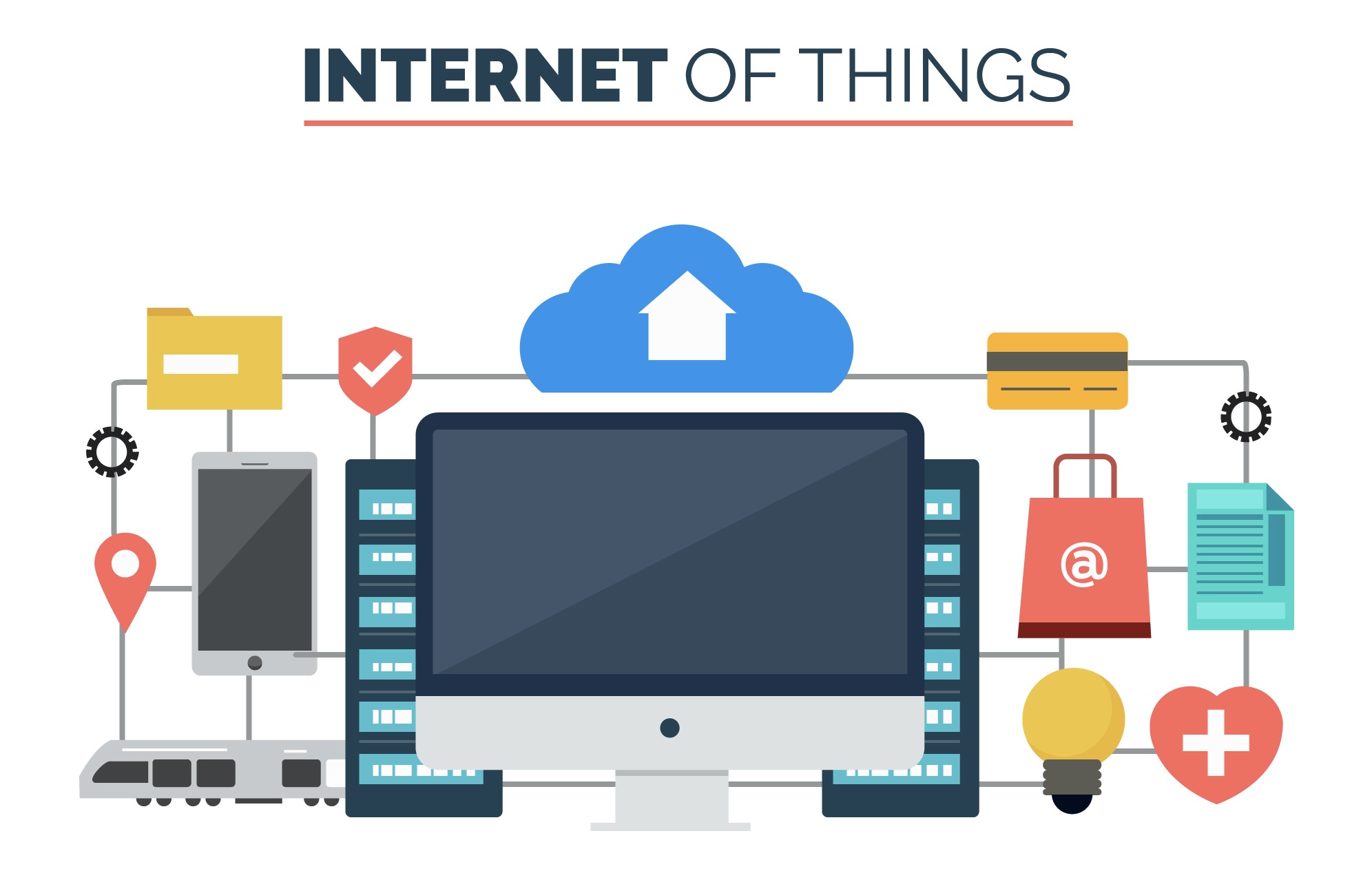
    The Basic of Internet of Things

    The Basic of Internet of Things
    Picture: Freepik

    What Is IoT?

    A Simple Explanation of the Internet of Things

    We all know that IoT is changing industries across the board. But what is IoT, exactly?

    The Internet of Things (IoT) can be defined as a network of physical objects or people called “things” that are embedded with software, electronics, network, and sensors which allows these objects to collect and exchange data.

    The goal of IoT is to extend to internet connectivity from standard devices like computer, or tablet to relatively dumb devices like a toaster. IoT makes virtually everything “smart”. It improves aspects of our life with the power of data collection, AI algorithms, and networks.

    How does the Internet of Things actually work?

    Remember, the Internet of Things consists of ordinary devices that can connect to the internet and communicate with each other over the cloud. Generally, that means adding special sensors to ordinary items like washing machines, heating systems, refrigerators, watches, or almost anything else.

    Some devices use these sensors to collect information and report it back. The first-ever IoT device mentioned above, a vending machine, used sensors to monitor its inventory and make that information available to the owner.

    Other devices can receive information and then perform an action. For example, smart door locks receive a signal that you want them to open then follow through by doing so.

    The most sophisticated — and generally, most useful — IoT devices can do both. In industrial IoT, this could be a factory monitoring machinery components for possible malfunctions. In home-based IoT, this could be your smart thermostat, which collects information about your temperature preferences and habits.

    Smart technology helps things work better — more efficiently and with more synchronicity.

    Most home IoT gadgets use your router to connect to a larger smart home. It allows you to use voice-activated commands or your smartphone to control many functions of your home to save time, energy, or both.

    Commercially, IoT tech helps companies monitor and manage their factories, supply chains, and more. Sensors can also be added to a given part of some large-scale machinery, such as the drill of an oil rig, which can help improve production and safety.

    Why IoT Matters

    When something is connected to the internet, that means that it can send or receive information. This ability to send and/or receive information makes things smart, and smart is good.

    Let’s use smartphones (smartphones) again as an example. Right now you can listen to just about any song in the world, but it’s not because your phone actually has every song in the world stored on it.

    How do IoT devices connect to each other?

    IoT allows web-enabled devices to connect to each other and act on data that are sent between them. Devices use the cloud to communicate, connecting over the internet using Wi-Fi, a cellular connection (3G or 4G), or Bluetooth.

    Soon, 5G will engender even more futuristic possibilities like driverless cars, and more advances that currently sound like a sci-fi movie.

    The benefits of IoT

    Why do we need the Internet of Things? Well, Aside from the cool factor of having smart and shiny devices, IoT brings a host of benefits to home and commercial settings.

    Firstly, having smart sensors in your devices can improve convenience and efficiency. For example, smart lights or a smart thermostat can automatically turn off when you’re not at home to cut down on consumption and thus costs. When you have all of your devices linked together in a smart home, you’ll collect data on your habits and usage. Sometimes even just seeing statistics about your consumption can be eye-opening and shed light on what changes you can make.

    Looking ahead, we’ll soon see even larger-scale applications of IoT tech with smart cities. As mentioned, 5G will really kick it up a notch — mainly due to its monstrously increased speed and vastly.

    IoT could also be hugely beneficial in monitoring and reacting to environmental conditions. We could vastly improve things like forest fire detection, crop growing, and controlling emissions to help with air pollution.

    Conversations about the IoT are (and have been for several years) taking place all over the world as we seek to understand how this will impact our lives. As more and more devices begin to join the IoT, we are also attempting to comprehend the potential and difficulties that may arise.

    The best thing we can do right now is educate ourselves on the IoT and its potential effects on how we live and work.

  • IOT (Internet Of Things): Penjelasan dan Cara Kerja

    Kita semua tahu bahwa, IoT (Internet of Things) mampu mengubah industri secara menyeluruh. Tapi IoT itu apa sebenarnya?

    Internet Of Things adalah jaringan yang tertanam dengan perangkat lunak yang memungkinkan jaringan bisa saling mengumpulkan dan bertukar data.

    Apa yang dimaksud dengan IoT?

    Tujuan dari IoT adalah untuk memperluas konektivitas internet dari perangkat yang standar. Contohnya seperti komputer, ponsel, ataupun tablet yang bisa tersambung ke alat pemanggang roti. IoT membuat segala sesuatu menjadi “pintar” dengan meningkatkan aspek pengumpulan data, algoritma Artificial Intelligence serta jaringan. 

    Bagaimana cara kerja IoT?

    Perlu diingat bahwa IoT, terdiri dari perangkat biasa yang mampu terhubung ke internet dan bisa berkomunikasi melalui cloud. Secara umum, IoT bisa mengoptimalkan kinerja sensor pada perangkat elektronik seperti mesin cuci, pemanas air, hingga jam tangan elektronik. 

    Beberapa perangkat ini menggunakan sensor ini untuk mengumpulkan informasi dan melaporkannya kembali ke IoT. Salah satu perangkat IoT pertama yakni mesin penjual otomatis atau yang dikenal sebagai vending machine. Mesin tersebut menggunakan sensor untuk memantau inventaris barang yang tersedia dan memberikan informasi barang yang terjual kepada pemilik mesin tersebut. 

    Perangkat lain yang dapat menerima informasi dan kemudian melakukan tindakan sesuai yang diperintahkan yakni kunci pintu pintar atau bisa disebut smart key. Smart key mampu menerima sinyal bahwa anda ingin membuka pintu dan smart key bisa melakukannya. 

    Perangkat IoT paling canggih

    Perangkat IoT yang paling canggih — dan pada umumnya, paling berguna — dapat melakukan menerima perintah dan melakukan perintah dari manusia. IoT dalam industri, bisa menjadi komponen yang sangat penting terutama untuk memantau mesin-mesin di pabrik dan bisa membunyikan alarm sewaktu-waktu saat terdeteksi suatu masalah pada mesin. Untuk rumah, IoT bisa menjadi termostat pintar yang akan mengumpulkan informasi tentang suhu AC yang pemilik rumah biasa gunakan atau bisa melakukan tindakan untuk memanaskan hingga mendinginkan rumah dengan mengatur waktu pada pukul berapa saja, sesuai keinginan pemilik rumah. 

    Secara umum, teknologi pintar mampu membuat semuanya bekerja lebih efisien dan bisa sinkron dengan perangkat lainnya. 

    Sebagian besar gadget IoT yang ada di rumah anda , akan terhubung dengan sebuah router yang bisa menghubungkan gadget ke rumah pintar anda. Dengan begitu rumah anda akan bisa lebih banyak menghemat waktu dan energi, karena rumah memiliki prinsip smart home.

    Secara komersial, teknologi IoT mampu membantu perusahaan untuk memantau dan mengelola pabrik, pasokan bahan untuk kebutuhan produksi, dan lainnya. Sensor juga dapat ditambahkan ke bagian tertentu terutama untuk mesin berskala besar yang dapat membantu meningkatkan produksi dan keselamatan pekerja.

    Kenapa Iot itu penting?

    Ketika sesuatu mampu terhubung ke internet, hal ini menandakan bahwa internet dapat mengirim informasi atau menerima informasi. Kemampuan untuk mengirim atau menerima informasi membuat segala sesuatu menjadi cerdas, dan cerdas itu adalah hal yang baik.

    Mari kita menggunakan smartphone. Saat ini anda dapat mendengarkan hampir semua lagu, tetapi itu bukan karena ponsel anda benar-benar menyimpan semua lagu. Tapi, karena setiap lagu disimpan di tempat lain, dan ponsel anda dapat mengirim informasi yakni meminta lagu yang anda cari. Dan kemudian mampu menerima informasi yang mana anda bisa melakukan streaming pada lagu yang diinginkan. 

    Bagaimana bisa IoT terhubung satu sama lain?

    IoT memungkinkan perangkat yang mendukung kinerja website untuk terhubung satu sama lain dan melakukan tindakan berdasarkan data yang dikirimkan. Perangkat ini  menggunakan cloud untuk berkomunikasi, dan terhubung melalui internet dengan  menggunakan Wifi, koneksi seluler (3G atau 4G), serta Bluetooth.

    Koneksi 5G akan melahirkan kemungkinan yang lebih maju di masa depan, seperti mobil tanpa pengemudi, kota yang saling terhubung seutuhnya, bisa mengoperasikan perangkat dari jarak jauh, bahkan akan banyak kemajuan yang mungkin saat ini terdengar seperti berada di film fiksi ilmiah.

    Manfaat IoT

    Mengapa kita membutuhkan Internet of Things? Nah, selain karena kerennya memiliki perangkat yang cerdas dan berkilau, IoT ternyata juga membawa banyak manfaat untuk pengaturan rumah dan bidang komersial.

    Manfaat yang pertama, memiliki sensor pintar di sebuah perangkat anda, dapat meningkatkan kenyamanan dan efisiensi. Misalnya, lampu pintar atau thermostat pintar dapat mati secara otomatis saat Anda tidak di rumah, hal ini sangat menguntungkan karena akan mengurangi konsumsi pemakaian dan menghemat biaya.

    Saat semua perangkat Anda terhubung dengan rumah pintar, Anda akan mengumpulkan data tentang kebiasaan serta penggunaan perangkat apa saja yang sering anda pakai.

    IoT juga bisa sangat bermanfaat dalam memantau dan memberi reaksi soal kondisi lingkungan. Seperti dapat meningkatkan hal-hal deteksi kebakaran hutan, penanaman tanaman yang berguna untuk memantau kondisi tanah perihal mengontrol rasa anggur serta mampu mengontrol emisi guna mengurangi polusi udara.

    Percakapan tentang IoT sedang terjadi di seluruh dunia, saat kami berusaha memahami bagaimana hal ini akan berdampak pada kehidupan kami. Kami juga mencoba memahami apa saja peluang dan tantangan yang akan muncul karena semakin banyak perangkat yang mulai bergabung dengan IoT. Untuk saat ini, hal terbaik yang dapat dilakukan adalah mengedukasi diri sendiri tentang apa itu IoT dan menganalisa dampak positif apa saja yang dapat dilihat terutama untuk mendukung keseharian atau kehidupan kita.

    Baca juga artikel Sagara lainnya di sini.

  • TOP 10 Recommended Back End Development Tools For Web Developers

    Back End Web Development (or Server-Side Development) is responsible for the appropriate functioning of the website. Without back end development, the web would be a boring landscape of static landing pages.

    10 Recommended Back End Development Tools For Web Developers

    There are several tools that can be used for back-end engineers. These tools are programming languages, frameworks, database management systems, web servers, testing & deployment tools, and various others.

    1. PHP (Hypertext Preprocessor)

    PHP is a server-side scripting language and is one of the most widely used programming languages for backend web development. We can validate this statement by letting you know that platforms like Wikipedia, WordPress, Facebook, and many others are relying on PHP.

    2. Python

    Another language is Python. It is a high-level, general-purpose programming language that supports multiple programming paradigms such as Object-Oriented, Procedural, and Functional. Instagram, Spotify, Google, etc. are some of the popular platforms that are using Python in their tech stacks. Python has a very simple syntax and comes up with better code readability aspects that subsequently make it easy to learn and use. Several popular Python web frameworks that you can take into consideration are Django, Flask, etc.

    3. JavaScript  

    JavaScript needs no introduction for its extensive role in web development. It is actually one of the fundamental units of web development alongside HTML and CSS. the language of JavaScript can also be used for game development, mobile application development, and so on.

    4. Laravel

    Laravel is one of the most popular PHP frameworks available in the tech world. This open-source web framework follows the Model-View-Controller (MVC) architectural pattern and provides you with numerous enriching features like a built-in command-line tool called Artisan, pre-installed Object-Oriented and Modular libraries, Eloquent ORM (Object Relational Mapping), Template Engine, and many others. The framework leverages you with various tools for particular tasks like dependency injection, unit testing, etc. 

    5. Django

    Django is a Python-based open-source web framework that allows you to do web development more efficiently and without any hassle. These follows the model-template-views (MTV) architectural pattern. The reason behind the immense popularity and demand for this particular framework is some of its noticeable features such as extensibility, rapid development, scalability, security, vast community, and many more. Businesses are using Django for various distinct web development areas such as social networking platforms, scientific computing platforms, content management systems, and various others. 

    6. MongoDB

    MongoDB is a free and open-source document-oriented database that is very much popular among web developers. This NoSQL database uses JSON-like documents with optional schemas for storage & retrieval of data and comes up with much-needed scalability and flexibility. MongoDB provides you with numerous prominent features such as Ad-hoc queries, Indexing, Replication, Load Balancing, File Storage, Aggregation, Transactions, etc. MongoDB is compatible with various standard programming languages like C/C++, Java, PHP, Python, Ruby, and several others.

    7. MySQL (My Structured Query Language)

    The most popular tool is MySQL. this tool is an open-source relational database management system that is widely used for web-based applications. It is a fast and high-performance database that provides better scalability, usability, and reliability. Also, MySQL provides cross-platform compatibility, strong indexing support, SSL support for secured connections, powerful data encryption and accuracy, built-in replication support, and various other features. Meanwhile, MySQL can work on various distinct operating systems and is compatible with many popular languages like PHP, Java, etc. 

    8. Apache

    Another tool is Apache (Apache HTTP Server). This is an open-source cross-platform web server that was developed by the Apache Software Foundation. There are numerous worthwhile features that come with Apache like Loadable Dynamic Modules, Multiple Request Processing modes, CGI support, User and Session tracking, Real-time status views, XML & FTP support, and many others. Also, the Apache Web Server is very much compatible with almost all operating systems such as Linux, macOS, Windows, etc.

    9. NGINX

    Another tool is NGINX. NGINX is an open-source web server that is also being used for reverse proxying, load balancing, caching, mail proxying, and more. It uses an asynchronous event-driven approach to handle requests and subsequently its modular event-driven architecture provides more expected performance under high loads. Some of the enriching features of the NGINX web server are – handling static files & auto-indexing, IPv6 compatibility, URL rewriting & redirection, etc. 

    10. GitHub

    GitHub is many, many things. A vast library of coding knowledge. A platform for open source collaboration. GitHub is a powerful version control software. This web-based tool allows you to share and store code, contribute to open-source projects and keep track of revisions. GitHub provides a community for developers to knowledge share and collaborate. It’s web democratisation at its finest.

    Read other Sagara’s articles here

  • Decision Intelligence: AI-Powered Decision Making Tool

    Decision Intelligence: AI-Powered Decision Making Tool

    Various digital solutions commonly involve data analysis, which determines the success of a wide variety of digital innovations. In fact, nowadays many businesses rely heavily on data for decision-making. This led to the emergence of a new discipline so-called “Decision Intelligence (DI)”.

    In this article, we’ll discover what decision intelligence is and how it could help businesses create a better outcome in decision-making.

    Defining Decision Intelligence: AI-Powered Decision?

    To fully understand the concept, let’s first clearly define a decision. Cambridge dictionary classifies a decision as a choice that you make about something after thinking about several possibilities.

    Whether in life or business, we are confronted with decisions every day. Our decision is usually influenced by a combination of several external and internal factors. That’s why it is difficult to imagine a holistic view of the situation since it does not take into account all of the influencing factors.

    However, it will be different if you involve the role of Artificial Intelligence (AI). Unlike humans who consider limited data and information, AI systems could process and analyze massive amounts of data in real-time. This will enable us to find the possible decisions based on the data and parameters set initially.

    To put it simply, decision intelligence is the commercial application of AI to help businesses value creation through a data-driven process with low risk.

    This technology is crucial to the AI era as it covers the skills needed to lead AI projects responsibly such as design objectives, metrics, and safety nets to allow for scaling automation.

    In fact, it also has been listed as one of Gartner’s 12 top strategic technologies trends for 2022 as it emerges as a solution that can connect decision support, decision management, and complicated systems applications.

    How Does It Work?

    The following technologies and algorithms are used to support decision intelligence:

    • Machine Learning (ML) – The algorithms in ML work with structured data and make suggestions or decisions according to certain parameters. For instance, banks use anti-fraud systems to prevent fraud, in which, if a suspicious IP address attempts to access their banking app, the system requires additional user authentication.
    • Deep learning – The next phase of machine learning is deep learning. In this case, a decision machine takes previous decisions and outcomes into consideration when making new suggestions.
    • Visual decision modeling – Although AI decision-making is a reliable starting point, decisions are still made by business owners and/or their employees. That is why visual decision models offer options and outcomes to decision-makers.
    • Continuous and dynamic system – The advantage of decision intelligence lies in the ability to quickly build a complex business logic based on the available data and the final objective.
    • Analytical prediction – AI systems make decisions based on accurate predictions. For instance, predicting retail prices or effectively optimizing retail operations. Decision intelligence makes these suggestions based on a multitude of factors, including price changes, predicted demand, and lots of customer behavior insights.

    How Decision Intelligence Benefits Business

    As Decision Intelligence encompasses all the combinations of artificial intelligence, machine learning, deep learning, operations research, statistics, simulation, businesses can become more data-driven, resilient, optimized, and cost-effective in their decision-making.

    However, despite the fact that decision intelligence relies on large input data and is not subject to cognitive biases, these systems still need human validation, especially when the choices made can cause conflicts of interest or values.

    So, this is what decision intelligence is all about! It combines different perspectives on decision-making and enables businesses to become data-driven, yet also take into account any relevant information when choosing the next right step.

  • 21 Software Development Trends to Watch Out For

    21 Software Development Trends to Watch Out For

    As we all know software development is constantly evolving. That is why in order to stand out from competitors, businesses especially need to stay up-to-date on software development trends.

    To help you get started, Sagara has put together this list of the top 21 software development trends for 2022.

    21 Software Development Trends In 2022:

    The Rise of Code Review Automation

    The first software development trend to keep an eye out for is Code review automation. For tech companies, it is essential to ensure the scalability, reliability, and sustainability of software projects.

    Code review automation allows developers to focus more on building new features rather than just reviewing code.

    The Importance of Software Quality Standard

    In our day-to-day lives, most of the devices we use are increasingly reliant on software solutions. This requires that software follow quality standards. 

    Quality software means meeting the requirements like being on time, within the specified budget, is bug-free, and maintainable.

    The Focus on Practical Coding Standards

    Good software development organizations require their programmers to maintain a standard style of coding called coding standards. Usually they define their own coding standards and guidelines based on the types of software developed and their organization’s needs.

    The Replacement of Legacy System

    Security vulnerabilities can be exploited more easily with legacy systems, This increase the risk of attacks and data breaches. Therefore in 2022, companies will evaluate more on their systems and technology stacks intentionally and periodically.

    The Implementation of Kubernetes

    Nowadays, companies around the world are increasingly adopting Kubernetes. Kubernetes is an open-source platform for automating container deployment, management, and scaling that enables cost-effective cloud-native development.

    An Adoption of Infrastructure as Code (IaC)

    IT infrastructure as code (IaC) has become quite a buzzword since it makes it possible to manage the entire IT infrastructure with machine-readable configuration files without the risk of human error.

    IaC advantages include cloud-native adoption, transparency, scalability, and better efficiency. All of this happens throughout the entire software development lifecycle, leading us to predict that IaC adoption will increase next year.

    The Dominance of Cloud-Native Technology

    Other software development trend to follow is Cloud-Native Technology. This enables us to have a container-based system that deploys services as microservices and runs them in containers.

    This can increase speed and efficiency, improving companies’ ability to respond to market changes.

    The Combination of SRE and DevOps

    Within the next few years, Site Reliability Engineering (SRE) techniques, including service-level indicators, will enhance the objectives of the DevOps teams.

    The Growing Issues of DevSecOps Security

    In 2022 security will continue to be one of the top priorities for companies. This will increase the adoption of DevSecOps.

    DevSecOps is an essential step in ensuring high-security standards, as security is considered in every pull request and commit. With this technology any threats can be detected and solved easily, and companies can integrate security into the entire lifecycle of products and applications.

    The Centralization through GitOps

    The best practice of DevOps best is to provide a base for GitOps which can aid in the automation of the infrastructure provisioning process by storing the declaration files in Git repositories.

    GitOps offers an easier and faster deployment process. Developers no longer need to search through cloud providers’ consoles.

    The FinOps Cost Management Solution

    FinOps helps organizations manage development costs and implement solutions that fit their needs and resources more effectively. For more efficient and intelligent solutions, companies set up teams to closely analyze their expenditures. 

    The analysis encourages the adoption of best practices for cost optimization and resource allocation.

    The Application of Artificial Intelligence (AI) and Machine Learning (ML)

    Artificial Intelligence and Machine Learning aren’t just buzzwords. As they are here to stay, they can improve performance and productivity without much effort, which will change how teams develop and deploy their products.

    The terms AIOps, MLOps, and DataOps are becoming more common. As they provide helpful automation to speed up processes and improve efficiency, we expect their importance to grow in 2022.

    The Ethical Implications of Artificial Intelligence (AI)

    Despite the fact that AI is growing and offers many benefits, it also faces challenges and risks regarding data security, personal data privacy, and ethical data usage.

    So, the tech industry will continue to develop ethical principles, guidelines, and regulations to ensure AI will behave ethically.

    The Expansion of Predictive Analytics

    Combining predictive data analytics with Artificial Intelligence and Machine Learning will be a big trend in every industry for the next few years.

    With predictive analytics companies can help identify risks and opportunities. Besides, it can also guide product development and design.

    The Application of Phyton

    The popularity of Python has increased in recent years, and we expect it to be the same in 2022. With AI and ML becoming more common, Python is fast becoming the language of choice for developers.

    The Chance for Low-code or No-code Solutions

    Due to low-code or no-code solutions, the development of new products and applications has become more accessible. These solutions also allow companies with lower resources to develop new products.

    Plus, the empowerment of individuals helps them find new ways to solve challenges and create domain-specific solutions that fit their needs.

    The Initiation of Testing Centers of Excellence (TCoE)

    Test Centers of Excellence provide a centralized testing platform combining a variety of high-quality testing methods for best use of resources.

    Although it still at its early stages, this technology has a lot of potential in the future. By using this method, testers can go through a test cycle in less time without affecting the quality of the code.

    The Advanced CI/CD Pipeline

    With CI/CD, you can constantly build, test, and deploy iterative code changes. This minimizes the risk of deploying error-prone and buggy code. It could also simplify and scale test automation, minimizing human error.

    The Growing Need for Outsourcing

    Finding competent IT professionals who can deliver high-quality solutions within budget is difficult for companies in all sectors.

    That is why several companies are outsourcing their development base, and we expect this tendency to increase in 2022. Some of the benefits of this approach include cost efficiency, faster turnaround, lower risk, and freeing up business resources.

    The Transparency of Software

    Higher demand for software creates a need for more transparency in the development process. Tech companies need to answer how they built the software and for how long they will maintain it.

    The New Trends to Remote Work and Hybrid Work

    The COVID-19 pandemic altered our perception of work-life, more companies will now implement remote or hybrid work policies where employees can choose the workplace that best fits their needs.

    The adoption of these software are already began in 2021, but it will continue to grow and become stronger in 2022.

  • Best Software House in Indonesia: 5 Recommendations!

    Best Software House in Indonesia: 5 Recommendations!

    In this digital age, it is inevitable to see an increasing number of the usage of various software in daily lives of people. It’s not an overstatement if someone says that software has become a basic necessity alongside other essential things. Therefore, the best software house in Indonesia is on the lookout.

    All of that leads to the sense of urgency for many companies or even start ups. They started to think about building their own software. Besides, it has been clear that software is one of the essential digital marketing channels. It would help any business to be able to reach more customers while also offering many different services.

    To make it into realization, a good and bonafide choice of software house is important in this matter. There are a lot of software houses, scattering all across Indonesia. Thus, this article will give you 5 recommendations for the best software house.

    Let’s get into it.

    Sagara Technology

    Sagara Technology as one of the best software house in Indonesia

    PT. Sagara Asia Technology, or Sagara Technology is a company that specializes in technology consulting and digital products. The company’s headquarters are located in Jakarta and Bandung.

    Established in 2014 by Adi Arriansyah, this company has accomplished 150+ projects since then. Emphasizing it as one of Indonesia’s leading software houses. They offer mobile device-based application development services for popular operating systems such as iOS, Android, Blackberry, and Windows Phone as one of its flagship programs.

    Sagara Technology’s portfolio includes a number of well-known clients such as Ruangguru, Boston Consulting Group, and others. Accordingly, this demonstrates their capability as one of Indonesia’s best software houses.

    GeekGarden

    GeekGarden is a company software house which is ISO certified and PSE leading company in Indonesia that focuses on the development of software Custom. 

    With the team highly skilled developers GeekGarden offers a wide range of services ranging from app creation mobile, website, until the system ERP (Enterprise Resource Planning).

    GeekGarden prides itself on having a team of IT professionals with deep expertise in a variety of platform Technology. 

    The team is not only experienced, but also keeps abreast of the latest technology to ensure optimal results.

    Kulkul Technology

    Kulkul Technology logo

    Kulkul Technology is an Indonesian firm based in DKI Jakarta. It is a technology-based company that strives to make high-quality software engineering more accessible to everyone.

    There are a variety of service programs available, including mobile app development, which focuses on two operating systems: iOS and Android. Furthermore, Kulkul Technology offers a Native alternative for this service, allowing for cross-platform use.

    Kulkul Technology is one of the best software houses to choose because of the different features it offers.

    Eyesimple Digital Agency

    Eyesimple Digital Agency logo

    PT. Cakrawala Utama Kreasi Indonesia, or Eyesimple Digital Agency, is the next best software house. It was created in 2011 and is one of Indonesia’s digital-based firms, having its headquarters in Surabaya, East Java.

    Apart from assisting customers in promoting their businesses on a local and worldwide level, Eyesimple Digital Agency also offers app development services for a variety of platforms, including, of course, mobile devices.

    Biwabits

    Biwabits logo

    Biwabits is our next recommendation for the best software houses in Indonesia. They are based on the western side of the country, specifically Medan, North Sumatra. It is considered as a very young company, having been created in 2018.

    Biwabits is a software development company that specializes in information technology outsourcing. They operates with four primary services, one of them is a mobile device-based application development service with cross-platform functionality.

  • Optimizing Non-text Components for SEO: 4 Easy Tips!

    Optimizing Non-text Components for SEO: 4 Easy Tips!

    Optimizing non-text components has always been overlooked in the field of Search Engine Optimization (SEO). Hundreds of SEO guides out there always placed emphasis on optimizing text components of a webpage.

    While it is not wrong by any means, the non-text components such as images, videos, and maybe audio files are having the same level of importance also. 

    As you may already know, Google and other search engines are doing a great job at understanding and interpreting text contents on web pages. But, contrary to that, they are yet to perfectly digest what a non-text content is all about.

    While AI and Machine Learning are still in development, the possibilities of Google and other search engines to be able to understand non-text components completely is there.

    But of course no one can wait, right? So, this is a pretty serious problem we’re having. In this article, we are going to talk about tips on optimizing the non-text components of a website.

    Let’s get into it.

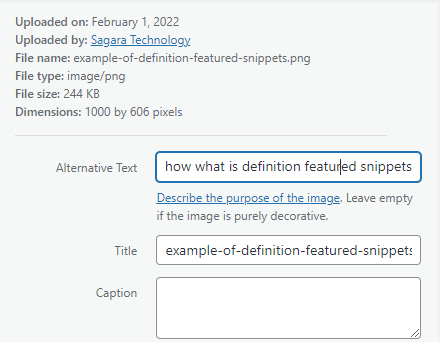
    Adjust the Image’s File Name and Alternative Text

    Writing a proper image's alternative text is one of the effort to optimize nontext components
    Editing an image’s alternative text with YOAST SEO Plugin

    The first one we’re going to talk about is the image’s file name and alternative text. As a non-text component, the majority of users will definitely recognize what’s in the image. Whether it is merely a logo, images with decorative purposes, and so on.

    Yes, the users will immediately understand what it is for, but for Google and other search engines? No, they do not. And in that case, we can help them to understand the image by manually adjusting two things; image file name and its alternative text.

    Here’s why:

    Search engines tend to pay attention to the file name and its alternative text in order to help themselves comprehend what the image is about. In other words, we have to make sure that they are crystal clear while also being keywords-oriented.

    For example, we can write “how-to-be-seo-specialist” as the name for an image in an article which covers about SEO Specialist guide. As long as it include your targeted keyword, you’re good to go.

    Notice that the main thing about writing the image’s file name is to use lowercases and hyphens as the space replacement.

    Whereas for alternative text, it is essential that you have to describe the image as clearly as possible while keeping it concise and keyword-rich.

    Write Caption or Descriptive Paragraph

    Keep in mind that this second tip is not exclusively for image elements, but for any non-text components also. It is about writing captions or descriptive paragraphs.

    While search engines can’t understand the non-text components, they are able to understand what is written on  web pages. That being said, placing descriptive paragraphs or captions around the non-text component could be a game changer.

    Here’s why:

    Search engines do analyze the texts that’s in close proximity to the non-text components. In short, search engines are making assumptions that there are correlations between the two components.

    So, by writing accurate descriptive paragraphs or captions around the non-text components, it would surely help search engines to understand what the non-text components are trying to convey. Hence, it’s optimized.

    Include Audio Transcription

    This third tip for optimizing non-text components is particularly for audio files only. Note that not all users are able to hear properly, whether it is due to age or it is a condition they’ve been living with since birth.

    So, in order to make our web pages inclusive for them while also helping search engines to understand our non-text content is to include audio transcription. The concept is similar to the tip before this.

    Audio transcription would be analyzed as correlated content with the audio file, therefore search engines would determine what it is about from what we’d write in the transcription.

    Be sure to write it as accurately as possible.

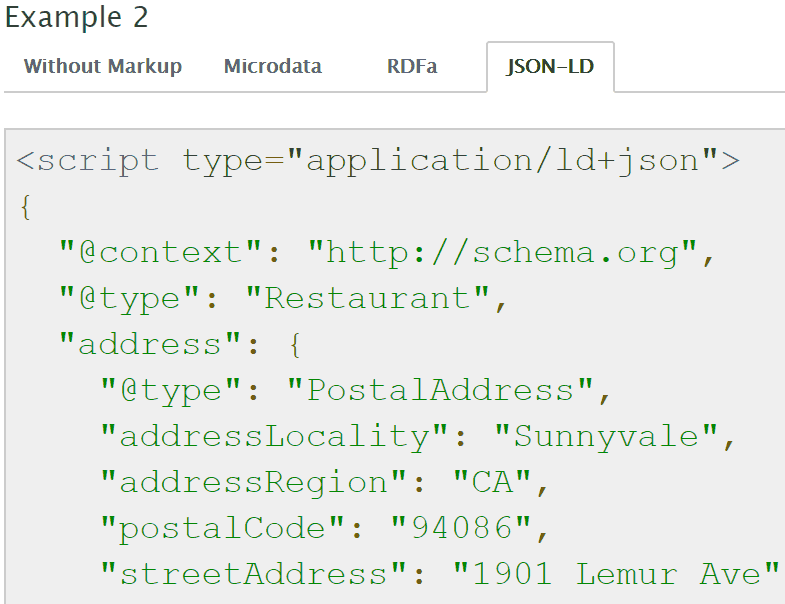
    Structured Data

    Structured data through schema markup is essential in optimizing nontext components
    Example of structured data

    This last tip is really the ultimate tip. Structured data is what SEO Specialists would thrive for in order to optimize their contents on a web page. So, what exactly is structured data? 

    Simply, structured data is just a way of describing our site to make it easier for search engines to read. The major difference between structured data and other tips earlier in this article is how it’s written.

    Structured data doesn’t show up as plain texts describing our contents. Rather, it is a code, which is much much easier to digest for search engines. And with that, we would want to know about Schema.org as a ‘library’ consisting of a large collection of codes.

    Read this article for further information about structured data.

    For non-programmers, Schema.org is such a big help for it has provided us with code templates ready to use based on our necessities. In this context, it is nontext components such as images, videos, and audios.

    Just go to Schema.org, scroll down until you find the right properties or elements to define your non-text components. Make sure to include as much information as you can for a better understanding by search engines.

  • How to Get Featured Snippets from Your Content

    How to Get Featured Snippets from Your Content

    This article will cover pretty much the basic of how to get featured snippets and many others in between.

    In a digital world, when the scarcity of information isn’t an issue anymore, it becomes excessive of information phenomenon instead. Which means, we have to compete really hard to stand amongst other information providers.

    In Search Engine Optimization (SEO) context, this is a core concept of it actually. One of the main objectives from those efforts we made to get a higher rank is to be visible for most of the internet users.

    In other words, we want to win the competition of being the entity that is highly trusted because of our information.

    But, it is quite hard and will take time to win that competition. So, to have featured snippets is like the ‘shortcut’ for being clearly visible and having an outstanding online presence in search engines.

    What are Featured Snippets?

    Featured snippets are short texts that we’d usually see at the very top spot of the search engine results page. It usually straight up answering the search queries inserted. 

    Google automatically pulls the contents inside them from a certain relevant and highly authorized website.

    Getting featured snippets for our blog post would be a HUGE advantage for us. Users would see our website as an highly trusted and authorized by being featured on that top spot.

    Getting Featured Snippets Based on The Type

    There are three common types of featured snippets; definitions, tables, and lists. All of them are answering the different type of needs from the search queries. Not only that, the measures for getting them would be slightly different also.

    The one important thing you should always bear in mind is that you SHOULD NEVER try to optimize for keywords that are already having featured snippets. It’s a waste of time. 

    Anyway, here’s how you optimize for them based on the common types:

    Definitions

    a picture to show what is definition featured snippets
    An example of what definition featured snippets looks like

    As you could already guess from the name, this kind of featured snippets represented by a box consisting of some definitions for a certain term. 

    Usually, the “what is” search queries are the perfect trigger for Google to show that kind of box.

    How do we optimize for that? It’s pretty simple:

    Write a clear and concise definition of a particular term (approximately 40-60 words). If you want, you can include the “What is XYZ” heading on top of that definition. In addition to that, always remember to be objective when writing the definition.

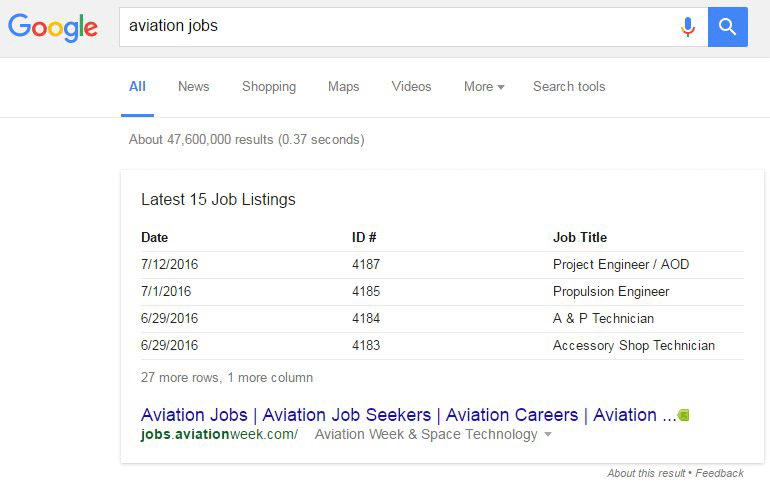
    Tables

    a picture to show what is table featured snippets
    An example of what table featured snippets looks like

    Likewise, table featured snippets clearly contain tables with particular theme and numbers. Most of the time, they are highly relevant with numeric data.

    The only thing that we should always remember is that Google never made their own table to be featured on top of the search engine results page. Which means, we should always make our own tables from scratch for Google to pull it up later into featured snippets.

    In other words, make sure we have a table in our content that is answering for specific user’s needs. And with that, let’s just hope Google will make a consideration for pulling our content as featured snippets.

    Lists

    a picture to show what is list featured snippets
    An example of what list featured snippets looks like

    Keep in mind that it can be in the form of sequential list or a no-order list. Sequential list oftentimes used to show the steps on how to accomplish something, while a no-order list usually used for elaborating recommendations.

    Wrap every point/step (depending on what type of list you’d want it to be featured) in H2 or H3. Google really appreciates good structured content, for it is easier for machines to read.

    The only thing we have to do to optimize this is to present our list in the content the way Google can understand it well. Here’s how:

    In addition to that, you can always include every point/step with numbers, pointers, or even texts like “Step 1”, “Step 2”, etc. Just make sure it’s in the right order and consistent, and Google will take your content into a serious consideration.

    Conclusion

    To wrap this up, keep in mind that Google is the main decision maker for featured snippets. It automatically pulled the contents from a relevant and highly authorized website. The main reason it exist is to answer the search queries as fast as possible.

    From the perspective of Search Engine Optimization (SEO), it would be such an amazing BOOST for us to have them pulled directly from our content. Think about the possibilities of attracting huge amount of traffics.

    Aside from that, what we need to look out for is the different measures to get them for ourselves. Consider first what kind of featured snippets we want to have, then optimize our content accordingly.