Sagara Technology with Santara doing a live talk show about FinTech discussion at Sagara x Leaders through Instagram Social Media. The interviewer this time is Mutiara as a Digital Marketing from Sagara Technology and RM Iskandar Zulkarnaen as a CTO from Santara.
Santara as a fundraising Service for investment stock micro business, beginning from the founders having a background about entrepreneurship and performer micro business.
Started from the performer micro business worried about their stagnant business until can’t reach for the biggest level. From the discussion with the performer, especially at Yogyakarta, was found the core of the problem at fintech discussion.
Live talk show at Sagara x Leaders
Santara officially founded about 2 years ago at 2018, started did not have a permission from Otoritas Jasa Keuangan (OJK). So many micro businesses interested with Santara, until Santara register their business to Otoritas Jasa Keuangan (OJK) to complete the condition and terms. Now, Santara have been registered at Asosiate Fintech Indonesia, and has been joined with Asosiate Crowdfunding Indonesia.
While about Sagara Technology, roll business is engage in Software, Web Design, UI/UX, and Application Mobile. Other than that, Sagara Technology has some development at Fintech, focusing at Peer to peer lending and Crowdfunding.
Positif and negative Impact about Develop technology
Iskandar says Technology Development has an impact in positive and negative. The positive is to make easier the activities, that previously hard to do. As the example at pandemic make It easier to communicate with other people, online shopping, and easy to get information and else. While the negative impact from the development of technology is the risk. For reduce the risk, technology development is not with awareness of user technology.
When it happened the pandemic, many business ventures got the impact pandemic, like closing customer, lack of venture capital, etc.
Santara and Sagara Technology not closing a possible collaboration for the future. Sagara has been tested in its field at software, mobile application, and other technical readiness could develop a software application for the micro business or Startup who get investor from Santara now and the future because the existing effort can not separate from Digital Industry.
Tips to Maintain The Business
Iskandar giving a tips for maintain business that is making customer pleased, search for user requirements, listening the feedback, and take action as needed.
And Iskandar predict startup trend in 2021 that is Security Crowd Funding (SCF). It is also predict that there will be other funding service models. Santara hoping will be Digital Transformation for business venture that are still controversial.
Iskandar also advised that the current technological developments must be balance by its users. “we should notice the impact from the technology, for example, the strength and weakness”, said Iskandar.
Many students these days are purchasing essays on the internet. More colleges and schools are requiring students to purchase essays online, and many of those students are taking advantage of their opportunities. The benefits for the student include the advantage and the chance to acquire their essay backup before they submit it to a school or college.
With so many diverse forms of essays readily available now, students are seeking the ideal way to get essays on the internet. There are two chief ways of purchasing them. The first is to buy them from the faculty, either from the student manual or via a school provider, such as Get A Head Start. The next way is to order them straight out of a school’s website.
While working in the business world, of course, many creative and innovative ideas can increase productivity in the business they are running. Because indeed capital is a foundation in a business.
If the foundation that is installed is not strong, then the business will not be able to support everything in it properly. That is why important to prepare a business for having sufficient funds as the main thing.
One of the best ways to do this is to apply for a business capital loan. However, before applying for a loan, make sure you start with interest and several other aspects that can hinder the running of your business in the future. To get a better loan, you can take advantage of crowdfunding.
Then, What is Crowdfunding?
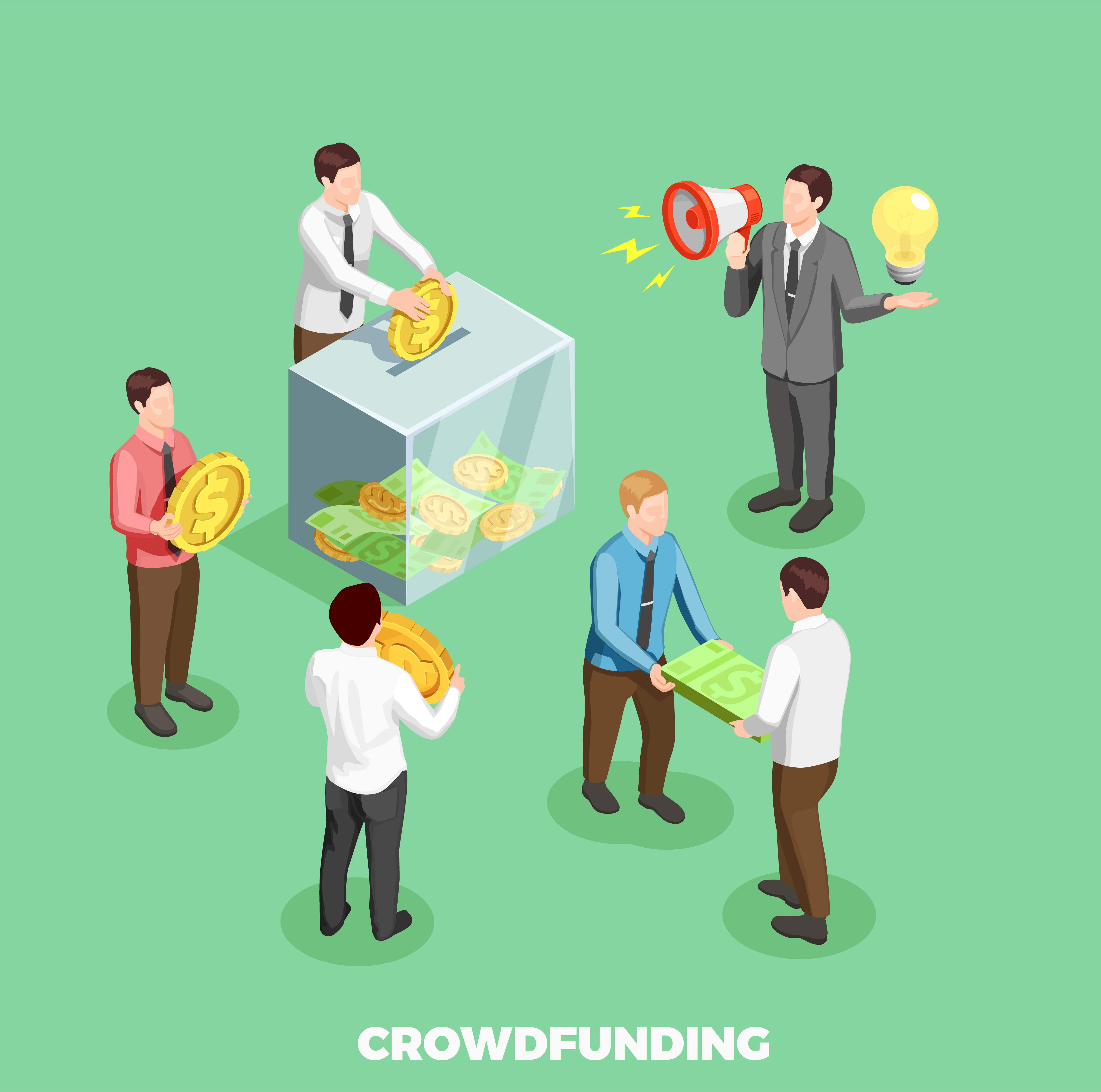
Crowdfunding is a form of funding for those who need funds in developing their business. And it is where the funding is collected from several people. This approach takes advantage of the collective efforts. Especially from some individuals online using a platform or crowdfunding social media, as an outreach tool.
Crowdfunding is also a form of crowdsourcing and alternative finance that is starting to emerge again. And widely people use to help entrepreneurs and startup SMEs.
In full, we will discuss how the crowdfunding system works:
How Crowdfunding Works
Crowdfunding has a pillar, namely a website or site to access and of course the owner of capital. The business or business owned will have a website to register and later will be able to display.
So that funders can invest their funds while helping the development of the business you have.
to collect, the process usually takes a few days. If you can collect the funds according to the target then the business owner can disburse the funds to your account. However, to further optimize it you can do the 3 things below:
1. Make a Business Proposal to Be More Attractive
So that people feel interested in investing their funds in the proposal you submit, then you can prepare an attractive, interactive, and more informative business proposal in its submission. This is so that those who want to invest their funds in your business or business can receive the information provided properly.
The information provided must also be complete, such as the type of business, the management process, the marketing process, and the main objectives of the business being undertaken. To present it through text, writing, pictures, and videos.
2. Register to the Crowdfunding Platform
If you have already made a good and sufficient proposal, and all transaction processes are safer, so you can look for a trusted crowdfunding platform and it has official regulations.
3. Monitoring the Progress of Proposals Submitted
After choosing a platform, upload the business proposal that you have made and after uploading it, don’t forget to continue to monitor the progress of the funding process. If capital owners asked questions regarding your business, you can give a short, concise, and clear answer.
This is so that investors feel interested and sure to invest in your business.
Benefits of Crowdfunding
In addition to easy access to enter the broader and bigger network of donors. Crowdfunding also has some benefits that you can experience, such as:
Wider Reach
This crowdfunding platform makes it easier for them to find people who are interested in developing funds across the region, then crowdfunding can also facilitate interaction and share fundraising campaigns.
Opportunity to do a business introduction
crowdfunding allows you to introduce your business or fundraising campaign and provide information that highlights the business you are building. For example, attractiveness, supply, target market to the value of the company.
This is so that prospective funders know more about the business and business and its development steps.
Doing Marketing
You can start doing marketing from fundraising through various channels such as social media, email to other marketing strategies. This is useful so that the fundraising you do through the crowdfunding platform can be full in a faster time.
Concept Validation
The best thing you might need to do is introduce your business or business concept, as we discussed a little above. Therefore, so that potential funders feel interested in investing in your business, you can take a more mature approach to convince them to develop their business.
Therefore crowdfunding does have many benefits other than for business development for those who need funds, crowdfunding is also a solution for those who want to develop their funds through assistance provided to businesses and businesses that need these funds.
While China is the clear leader in this emerging market of FinTech in Asia, Indonesia is now following suit and poised for growth. Strong growth recorded in investments into FinTech startups also signal the future potential of the sector.
Being an archipelago country with 17,504 islands, limited infrastructure, and credit information, FinTech in Indonesia can solve the financial inclusion challenges in Indonesia.
Why FinTech?
FinTech startups are introduced in the favour of helping the banking sector to conquer limitations of topography, reaching out to more remote areas.
Moreover, being the major players in the Indonesian banking market, bank institutions did not bother much about a customer-friendly approach. Confusion and complications became a routine when issuing bank loans or searching for information. Thus, FinTech in Indonesia is a sector with great potential.
As mentioned, the FinTech sector especially lending will continue to grow. Its expansion will support small and medium businesses in Indonesia. As the main reason for their low productivity is due to poor access to financing.
Three Crucial Factors for FinTech Growth in Indonesia
Customer’s Behaviour
The positive shift of customer’s behavior towards digital services is obvious. This is because they see this financial technology as very convenient; you can assess anytime, anywhere with any devices—in comparison with bank services that require submission in person.
Lower Fees
To reach the under-served segments and provide everyone lower transaction fees, government enhances the access to financial services.
High Restrictions
Small and medium businesses are having a hard time making use of particular banking services due to the highly restricted bank loans.
Cash to Cashless
A few years ago, 99.5% of transactions in Indonesia were in cash. However, now we have witnessed the increased popularity of cashless transactions, with the emergency of FinTech startups. As of December 31, 2016, there were more than 17.4 million credit cards issued in Indonesia. For that, Indonesia is expanding FinTech in key financial services including payments and lending. Furthermore, the industry in Indonesia recorded positive growth in terms of the transaction value. A transaction value was recorded at US$ 333 billion in 2013 and would increase significantly to US$ 563 billion (in estimation) in 2019.
We see a lot of exciting trends driven by payment gateway providers such as DOKU, Midtrans, and Xendit, with hundreds of other FinTech innovations on the rise.
The credit card as a preferred payment, for example, is convenient because there is no need for consumers to search for an ATM or to have some cash on hand. A credit card is also a great way for record-keeping with regular transaction statements for expenses and spending tracking.
With the increasing use of e-money products, the volume of bank transfers and online transactions is growing in Indonesia, even though the preferred payment method is still cash. The growth has shown no signs of slowing with FinTech startups around the world, including Indonesia pushing for a cashless society.
Financial Inclusion
Indonesia is one of the highest unbanked populations in the world. Among the 58 million small and medium enterprises in Indonesia, only 12% have access to credit because of the deficiency of credit history, statements, or collateral. And even more shockingly, these small and medium businesses contribute 60.3% of the total GDP in Indonesia.
The Indonesian government is, therefore, pushing for financial inclusion. This is done to open up opportunities for institutions with traditional finance models, and FinTech new entrants.
FinTech Awareness
The Financial Services Authority (OJK) of Indonesia have been holding FinTech festivals to increase consumers awareness.
During the yearly conference Finspire 2017 on October 19, Mandiri Capital Indonesia (MCI) has invested approximately 300 billion IDR (US$22.4 million) in seven FinTech startups. Private lender BTPN also catches up with the digital wave and spent 1.3 trillion (S$131 million) to develop a digital platform.
To share knowledge, insights, and ideas on this financial service ecosystem, all FinTech organizations and regulators, financial institutions, digital professionals have gathered at this event. Investors, founders, students, entrepreneurs, and startups were invited to participate in this event to accelerate this development and discuss the future of FinTech in Indonesia.
Furthermore, OJK with the support of the Central Bank of Indonesia has implemented a FinTech registration system for startups. This has proved that FinTech is formally recognized. As of June 2017, a total of eight startups have registered, and much more in the process. The inauguration for FinTech Advisory Forum also happened around the same time to direct the FinTech industry’s development.
Sagara Technology as a software development industry including website, mobile apps, and Fintech. Solution can provide your business technology through digital. You can entrust it to Sagara Technology. We have a team of professionals who will help the company to develop a safe and convenient system.
Software-as-a-Service (SaaS)—also known as cloud-based software—is now mainstream. From massive corporations to tiny mom and pop shops, cloud-based software is the default deployment method in 2020 for nearly every type of business technology in the world.
And for good reason. Business applications delivered via a web browser lack painful installations or strict contracts and are paid for overtime instead of all at once. This usually makes the systems more flexible and affordable enough for any budget.
Yet many of the business leaders we speak to every day at Software Advice still have questions about SaaS and want to know why it could be a good choice for their company. Based on those conversations, here are the top 10 frequently asked questions about SaaS.
1. What is Software As A Service (SaaS)?
SaaS is a method of software delivery that allows data to be accessed from any device with an internet connection and a web browser. In this web-based model, software vendors host and maintain the servers, databases, and code that makes up an application.
The cloud-based model is so common now that more than 60% of software seekers who call Software Advice only want web-based products—less than 2% specifically ask for on-premise software.
The traditional on-premise software delivery model differs from SaaS in two key ways:
SaaS deployments don’t require extensive hardware, which allows buyers to outsource most of the IT responsibilities typically required to troubleshoot and maintain the software in-house.
SaaS systems are typically paid within a subscription model, whereas on-premise software is usually purchased through a perpetual license, paid upfront.
On-premise users can also pay up to 20% per year in maintenance and support fees. The annual or monthly subscription fee for a SaaS system will typically include the software license, support, and most other fees.
2. Software As A Service (Saas) versus on-premise: How do I choose?
The first step to answering this question is to determine the complexity of your business. Answer a few questions about your business to help you determine if SaaS is the best choice:
How specialized is your business compared to others in your industry?
Do off-the-shelf products offer the functionality you need?
What level of software customization do you anticipate needing?
Another factor to consider is your budget. As mentioned above, SaaS subscription payment models help companies with smaller budgets spread the total cost of ownership over time, so even small businesses can adopt robust, modern software.
It’s no longer the case that buyers have to choose between flexibility and functionality. Most cloud-based software today can offer the same experience as an on-premise installation.
The bigger question is around data ownership. The vast majority of vendors still place data in the possession of the end-user, but be sure to review the service contract to understand exactly how your data will be used.
A few industries are slower to embrace cloud solutions (for example, many manufacturers still opt for a traditional ERP deployment), but when searching for new technology, the cloud is the new default.
3. What is the history of Software As A Service (SaaS)?
In a 1961 speech to MIT students, John McCarthy, a renowned computer scientist that won the Turing award for his work in artificial intelligence (AI), famously said, “computation may someday be organized as a public utility.” In other words, the concept of cloud computing began as a shared resource of computing power.
While the idea has been around for some time, the web-based technology required to support SaaS matured in the late 1990s. That’s when companies such as Salesforce—which was founded specifically to create cloud software—began offering traditional enterprise solutions, such as customer relationship management (CRM), through a SaaS model.
At first, the enterprise software world didn’t take SaaS seriously. But the past decade has shown rapid SaaS growth and adoption with a new set of businesses using software for the first time. Cloud software adoptions are growing far quicker than other cloud technology segments, such as Platform- (PaaS) or Infrastructure-as-a-Service (IaaS) products.
4. Can I customize Software As A Service (SaaS) software?
Yes! Today’s web-based software is flexible enough to be modified for specific business uses but also individual users. Buyers can customize the user interface (UI) to change the look and feel of the program, as well as modify specific areas, such as data fields, to alter what data appears. Several business process features can also be turned off and on at will.
Users can often tweak their workspace, such as a dashboard or task list, to show only the information they need to see and optimize their unique work style.
Today both on-premise and SaaS systems can be customized from top to bottom for each client, but cloud-based software still offers far more agility and flexibility for the average company.
5. Who owns my Software As A Service (SaaS) data?
In the vast majority of cases, you still own your data in a cloud-based system. Most service level agreements (SLAs) confirm your company’s ownership of your data located on the vendor’s servers, as well as your right to retrieve the data.
Most SaaS contracts also have built-in and prepaid contingencies that will provide access to your data if the vendor goes out of business and guarantees that you own that data.
Furthermore, most SaaS vendors will let you export your data and back it up locally any time you want. It’s very unusual for any vendor to insist that they retain ownership of your data. If you notice this in a clause, don’t sign the dotted line. This SLA is an important and fairly complex document that should be scrutinized with your stakeholders before committing to purchasing a new solution.
In addition to data ownership, be sure to carefully review these aspects of an SLA:
Responsibilities of the software vendor for support, updates, or security
Your responsibilities as a client to notify the vendor of issues promptly
Guarantees for service, such as level of uptime and how a customer can respond to poor service
6. Is my data safe in the cloud?
Software providers know clients are wary of cloud security and work hard to prove how safe data is in their servers. Many SaaS providers utilize highly secure public cloud services to deploy and store their software instances and data.
For most companies, data is at more risk in-house, where there’s less budget dedicated to IT security, and where employees or others could unintentionally leak data or introduce security gaps. Gartner predicts that through 2022 at least 95% of cloud security failures will be the customer’s fault.
The debate around cloud security for ERP systems rages on, but it represents one of the last software segments that experiences significant security failures.
Weak passwords are common in the workplace, according to a recent Software Advice survey, and tend to cause more security problems than hackers.
In truth, data security is independent of whether the server is sitting right next to you or in a different city. SaaS vendors can invest much more in security, backups, and maintenance than any small to midsize enterprise.
7. What if my vendor goes out of business?
Software vendors come and go all the time—whether through industry consolidation or business failure. The data, however, is typically yours to keep.
Most SaaS vendors prepay their data center hosting company to “keep the lights on.” This prepaid fee is meant to safeguard companies to ensure their data is accessible in the event something should happen with the vendor.
Look for a few things about the vendors on your shortlist:
How long has the company been in business?
Are they growing in customers and/or employees?
Do they have a technology roadmap?
The important thing here is to make sure your SLA has a clause that explicitly states that you can export your data from your provider, which is standard today.
This clause should also include how often and in what format you may access your data. It’s common for SLAs to also stipulate that the vendor will help migrate your data for an appropriate fee.
8. What are the internet and operating system (OS) limitations?
The primary downside of SaaS is that it relies on a good internet connection. But unless your business resides in a remote location, your connection will be more than sufficient to utilize today’s SaaS systems.
While many believe on-premise systems to be more reliable, no system is fully immune to downtime. On-premise software is subject to electrical outages, hardware failures, and a range of other risks.
As a safeguard, some SaaS vendors have developed “offline” functionality that allows people to keep working if the internet does go down. Once a solid connection is available again, all the data is synced to the system.
Beyond the internet connection, some buyers worry about compatibility with different operating systems. It’s unlikely you’ll need to consider OS compatibility—most are delivered via web browsers and are fully OS agnostic. At the most, you may need to download a different web browser that will work best for your SaaS system.
9. SaaS versus cloud: What’s the big difference?
The cloud refers to a set of incredibly complex infrastructure technologies. At a fundamental level, it’s a collection of computers, servers, and databases that are connected in a way that users can lease access to share their combined power. The computing power is scalable so that buyers can dynamically increase or decrease the amount of computing power they lease.
The cloud can refer to anything that’s hosted remotely and delivered via the internet. While all cloud programs are run by underlying software, SaaS refers specifically to business software applications that are delivered via the cloud.
Given the widespread growth of cloud accessibility, it’s easier, faster, and less expensive for SaaS developers to roll out applications as compared to traditional on-premise software development. Today, nearly every type of core business function—from human resources to enterprise resource planning—is available via SaaS.
10. What is a private cloud?
A private cloud takes all of the infrastructure technology that runs a public cloud and stores it on-premise. Users achieve the same functionality and ability to access their data through a web browser.
However, instead of sharing the computing power with the general public, the computing power is shared among users at one company.
Contrary to the quickly growing public cloud model, a private cloud requires an IT department to perform maintenance and upkeep. Establishing your private cloud can be costly and requires an investment in the infrastructure required to develop and maintain a cloud environment.
Private clouds also require large or complex projects to generate a return on investment. For large enterprises that don’t want to put their information in a publicly accessed cloud, it is an attractive option.
Ready for the cloud? Here’s how to get started
You can make sure your business is ready for cloud software by reviewing these frequently asked questions with important stakeholders. If everyone understands how the technology works, you can then determine the most effective type of deployment for your specific needs.
Review our SaaS product pages to find:
Maintenance software accessible wherever the job takes you
Construction systems that maintain centralized data
Accurate medical billing without expensive IT resources
Maybe you’d prefer a helping hand—you can chat with one of our knowledgeable advisors to get a free shortlist of products that best fit your needs. Or set up an appointment for a free phone consultation when it works best for you.
FinTech or Financial Technology is a term used to describe financial technology. While understanding of FinTech according to Otoritas Jasa Keuangan (OJK) is an innovation in the financial services industry that utilizing of technology.
Basically, FinTech is used to help companies, business owners, and consumers to manage their finances better by utilizing digital technology. Some examples of services are provided such as crowdfunding platforms, mobile payments or m-banking, budgeting apps, and many more.
Use of RPA (Robotic Process Automation)
RPA (Robotic Process Automation) can be defined as a technology that utilizes a system to automate tasks normally performed by humans. This technology combines robotic automation with artificial intelligence (AI) to handle repeatable tasks. By using this technology, a company can save money and improve the efficiency of work.
By 2021, it is expect that more companies or financial institutions will adopt the technology. The tasks that can be done by this system are quite diverse such as helping the process of opening or closing accounts, managing audit requests, assisting the insurance claim process, and others.
Digital-only banks of Financial Technology
The next development of FinTech is the increasing number of digital-only banks. This service is quite wide found in Indonesia. Examples include Jenius, Digibank, and TMRW Digital Bank. Today, digital-only banks are becoming one of the popular trends in the FinTech world. The bank will provide all its banking facilities online without having to provide branches or physical offices so that customers do not have to queue and provide various documents to open savings accounts.
With a digital-only bank, customers only need a PC or smartphone connected to an internet connection to manage their finances. When compared to conventional banks, this digital bank has several advantages, namely: much more flexible usually offers innovative services at a much lower price more practically used for online transactions have many interesting features Because it is provided digitally, then this bank will provide good security in its system. Usually, they will use 2 factors authentication and a fingerprint sensor in the system.
Using Artificial Intelligence for Financial Technology
There will be more banks or financial companies that will use Artificial Intelligence (AI) in their companies. In the financial industry, AI can be use to check cash accounts, credit accounts, investment accounts to see one’s overall financial health, and much more. In addition, AI technology can also help detect cyberattacks by identifying fraud as well as financial threats. With these capabilities, the use of AI is believe to reduce operational costs so that companies can save more on expenses.
Cyber Security System Enhancements
Maybe you’ve heard of several cases of hacking that caused data leaks on digital banking platforms in Indonesia. The threat of cyberattacks can occur on a daily basis to exploit vulnerabilities that exist in developed technologies. That is why improving web or application security systems will always be the concern and priority of companies that provide Fin-tech services.
To improve the security system within their platform, companies must implement various security protocols, one way is to use biometric security. Biometric security is a device use to capture biometrics for verification of a user’s identity. Technology is expect to start to be widely used in Fin-tech companies.
In addition, Fin-tech companies also need to increase the security awareness of their users so that they avoid social engineering attacks. The system developed must also have good security. Otherwise, hackers can exploit existing vulnerabilities to steal sensitive data on them. The development of Fin-tech that occurs today is very easy for its users. The use of increasingly sophisticated features and technologies will make consumers feel comfortable and safe when using digital financial services.
Develop a website or mobile application with an online payment system in it, you can entrust it to Sagara Technology. We have a team of professionals who will help the company to develop a safe and convenient system.
In this era of the 4.0 industry, new types of digitalization in various industries keep emerging and surpassing all of what we previously imagined to be possible. One of the most prominent emerging industries is financial technology or often called FinTech in which they integrate the use of technology to improve financial activities. With the emergence of many FinTech companies nowadays, the term P2P (Peer-to-Peer) lending shouldn’t be foreign anymore even to the common folks. However, this leads to the question of how many people actually know what P2P Lending is and how it works.
It can be defined as a marketplace in the form of a website or mobile application where investors or lenders can be connected to the borrowers and vice versa. P2P Lending is usually also known as “social lending”.
P2P lenders benefit from getting a better return on P2P rather than saving their cash in the banks, while on the other hand, P2P borrowers can benefit by getting a better rate compared to the rate offered by the banks. P2P Lending companies set their own rate and term & can also be called the “middleman” of these transactions between the lenders and the borrowers who will not meet physically and are often strangers.
The workings of P2P Lending can be simplified into several steps. First and foremost, both lenders and borrowers start by making accounts on the P2P Lending platform which can be in the form of a website or mobile applications. After the accounts are verified then the lenders will deposit a certain amount of money to their account which will then be divided into several loans. On the other hand, borrowers will make a financial profile which commonly includes how much of interest rate they are willing to pay and then review offers that are according to their liking. When both sides agree to a certain offer, all their transactions will then be done through the P2P Lending platform.
Furthermore in Indonesia, the risk is minimal as long as the associated FinTech company which provides the P2P Lending is registered in Otoritas Jasa Keuangan (OJK) as opposed to online loans (pinhole) which are high risk and considered illegal in Indonesia.
If you are considering using a P2P Lending site, you should also take the transaction fee into consideration as it differs between different companies. Additionally, please make sure to check whether the company is registered in OJK and research accordingly in order to avoid any losses.
The Digital Product development stage focuses on planning, developing, and evaluating a product. Moreover, this stage consists of:
Plan or Generate an Idea,
This stage is to make sure that you have a valid business case for the product and a solid strategy to give your startup the best chance of success. Requests from customers, brainstorms with employees, responses to a competitor’s product, or suggestions on social media are places where you can find ideas for your new products or services. You could also start market research and competitive analysis to understand the market and key players in it.
2. Develop,
This stage will be done after the product (software or hardware) is built. Unfortunately, building the software is not as straightforward as saying “get it built”; The product needs to be broken down into features, with specifications and user stories for each feature. Then, it should be ranked by the difficulty and priority to estimate the time consuming to create a minimum viable product.
3. Evaluate,
In this stage, key performance indicators could be used as a metric to measure the success of the product. All the metrics below could be used in evaluation:
Launching the product means that you let your target audience that your product is ready. It can be done with press announcements & interviews, advertising, creating public launch events, etc.
5. Assess,
Assessing the product entails collecting metrics and analyzing them, to gather insight into the performance of the product. A/B testing, challenging how to improve a return on investment, testing what makes a returning customer are a few possibilities for assessing and analysis.
6. Iterate or Kill.
This stage is where the decision about keeping/updating or removing features is made.
Based on the explanation above, the product development stage matters because it is needed to ensure that your product can build a strong market share and fend off competition by continuously innovating
API stands for application programming interface, a concept that applies everywhere from command-line tools to enterprise Java code to Ruby on Rails web apps. An API is a way to programmatically interact with a separate software component or resource.
Unless you write every single line of code from scratch, you’re going to be interacting with external software components, each with its own API. Even if you do write something entirely from scratch, a well-designed software application will have internal APIs to help organize code and make components more reusable. And there are numerous public APIs that allow you to tap into functionality developed elsewhere over the web.
What is an API?
An API is defined as a specification of possible interactions with a software component. An API defines functionalities that are independent of their respective implementations, which allows those implementations and definitions to vary without compromising each other. Therefore, a good API makes it easier to develop a program by providing the building blocks.
When developers create code, they don’t often start from scratch. APIs enable developers can make repetitive yet complex processes highly reusable with a little bit of code. The speed that APIs enable developers to build out apps is crucial to the current pace of application development.
Developers are now much more productive than they were before when they had to write a lot of code from scratch. With an API they don’t have to reinvent the wheel every time they write a new program. Instead, they can focus on the unique proposition of their applications while outsourcing all of the commodity functionality to APIs.
API Guidelines and Basic Principles
Some of the guidelines and basic principles described below are subjective but they are essential in today’s API development. They provide fundamental benefits and help to stay at par with industry-wide adoption of best practices:
Vocabulary
This refers to the standard naming conventions one should follow while naming each API endpoint. They should be human-readable, easy to understand, and follow the HTTP standards.
Versioning
By versioning, you are allowing various consumers to access your published APIs in two different variations. Though Version management adds complexity to the existing APIs, they do however help in better management of API endpoints, thereby serving various consumers through different mediums. There are two different ways to implement this:
URL — For e.g., api.myorg.com/v1/users
Accept Header — requesting for specific version via request/accept header
Support Multiple Media Types
At any point in time, a given object or resource can have multiple representations. This is necessary so that various consumers can request the content or resource in the manner that they would like. Having said that, it is not necessary to support all media types, only the ones that are required based on specific use cases.
Caching and Concurrency Control
Caching improves performance, thereby providing faster access to frequently accessed resources and eliminating the load on backend services. However, caching comes the challenge of managing concurrent access. Therefore, it is essential to manage the caching in a better way using HTTP standards such as:
ETag — Entity tagging. Equivalent to versioning each entity for updates
Last-Modified — Contains the last modified timestamp
Standard Response Codes
This responsibility lies with business owners as it affects the business needs of consumers of your APIs. The contract definition should contain all possible error codes that could occur with each API.
Adhere to the standard HTTP response codes
Include both business and developer messages. Developer messages should be optional and contain technical messages that guide debugging and troubleshooting techniques.
Due to security reasons, do not reveal too much about the request (to avoid Cross-Site Request Forgery).
The best practice is to limit the list of potential error codes, as too many error codes lead to chaos.
Security Considerations
This does not require much explanation, as security requirements are the basic needs of any application or an API. Keep in mind that your APIs are mostly public, so invest the effort required to secure them. API management platforms (explained in the later section) provide security mechanisms; however, as an API developer, you should be aware of the current trends and industry best practices adopted in addressing security requirements.
Always use SSL
APIs are stateless, so avoid session/cookie management — authenticate each request
Authorize based on resource, not on URL
HTTP status code 401 vs. 403: Some may prefer to use code 401 rather than 403 to indicate that either authentication or authorization failed
Follow the guidelines defined by the Open Web Application Security Project (OWASP) Threat Protection
API is becoming increasingly important in web development, and its popularity and usage have increased exponentially in the past few years. Hopefully, this article has detailed the basic principles of API. If there are additional notes that I have not included, please mention them in the comments.
Billions of people around the world interact with smartphones every day to perform various actions, Example: Turning off the sound of a phone or pressing the play button of the youtube video, signing in to a social networking site, sliding down the screen to refresh a page…the possibilities are endless. Each of these actions occurs in micro-interaction.
Micro-interactions are events that have one main task — a single purpose — and they’re found all over your device and within apps. Their purpose is to delight the user; to create a moment that is engaging, welcoming, and, dare we say — human.
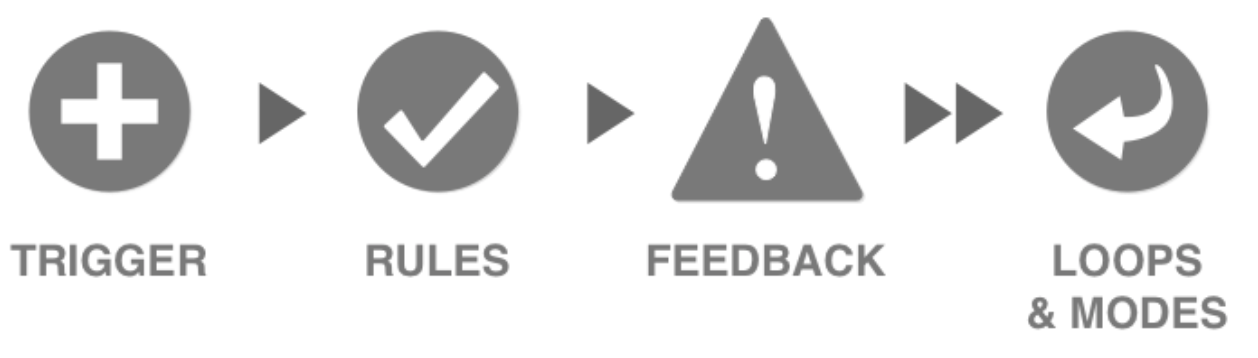
Four Parts of Micro-interactions
Trigger
The first part is what initiates the interaction. The trigger occurs when the user or the system activates the interaction. In the case of system triggers, certain requirements need to be met for activation. Take, for instance, a user that typed in the wrong password. A website’s prompt then asks if the password was forgotten and if the user wants to recover it. In this case, typing in the wrong password is the trigger.
Rules
The second part determines what happens when the micro-interaction has been activated. In the previous scenario, the rule is when the system must automatically ask whether the password was forgotten and if the user wishes to recover it. Rules should be invisible, only known to the designer, and molded to fit the needs of the customers.
Feedback
The third part is when the system lets the user know what’s happening. This can happen visually, audibly, or by feel. Feedback notifies the visitor that the micro-interaction has been initiated. In the password example, the feedback would be the prompt stating that the password was typed wrong and that it needs to be typed again (or that the forgotten password needs to be replaced).
Loops & Modes
The fourth part determines the meta-rules of the micro-interaction, i.e. what happens when the conditions or requirements change. A loop determines the length and repetition of a micro-transaction — in our example, the number of times a person can type in a wrong password. Modes, on the other hand, determine what happens over time — that is, three wrong password inputs will block the account.
Why Micro-interactions Matter
So why do micro-interactions matter?
For one, they make navigation easier, which should be the goal of all designers and developers. Better navigation means users stay, buy, and visit again.
They also improve the rate of interactions, provide real-time information, and make users feel that their experience matters. They also help guide the customers by giving them tips and instructions wherever they are in the buying process.
Micro-interactions can be considered as the little things a digital store clerk does to meet the customers’ every need. If the digital clerks take good care of the users, they will feel good and want to come back. Micro-interactions help improve the chances of leaving a good impression.
When To Use Micro-interactions
In the UX/UI, micro-interactions are touted as the powerhouse when it comes to communicating with the user. Below are the top seven micro-interactions and their impact on user experience:
Swipe Feature, The Swipe action eliminates tapping and is much more interactive and smooth. It helps the user quickly switch between the tabs and acquire more information about the product.
Current System Status, It is essential to keep the user informed about the current status happening on a site or app. Micro-interactions let the user know exactly what is going on, how long it will take the process to complete etc. Even failure messages can be humorous yet effective to retain the trust of the user.
Tutorials, writing actionable and easy-to-follow blog posts remains useful, but it is not enough in this fast-paced cyber age. Micro-interactions can help create fun and interactive step-by-step tutorials for users to easily learn and engage with a product or service.
Call to Action, Micro-interactions essentially nudges the user to interact with an application or website. Call to action instills a feeling of achievement and also empathy factor in user behavior and the best way to make your user interact with CTA is to make it engaging to entice the interest of the user.
Animated input fields, Animations will make simple processes interesting and clearer — such as highlighting and zooming in fields when inputting data on sign-up forms, credit card details, and the like.
Animated Buttons, They play the role of information manager by letting the user know their way through your app or site. We need to pay attention to color, shape, special effects, animations, placement, and texture to make the user experience seamless.
Notifications, Folks who have short attention spans and might forget a product or a pending transaction. A simple micro-interaction via a notification can reel them back in to start or finish a transaction.
Humans, and even more the tech generations, want things instantly. Whenever a micro-interaction can provide that immediate gratification to end users, develop a good strategy around it and design to use it.
Tips On Designing Micro-Interactions
Micro-interactions are not an overnight success. For these to be effective, designers and web developers need to pay attention to details and keep the following tips in mind:
Keep it micro and effective. A micro-interaction shouldn’t be seen until it’s needed. And when it’s needed, make sure it works. It shouldn’t be the focal point of a website nor should it be a source of error or take too much time to complete.
Make them age well. A micro-interaction should be as pleasant the first and tenth time the user interacts with it.
Build on knowledge. Use the information available on user behavior to apply micro-interactions that cater to them.
Create harmony. Make sure that micro-interactions not only look and react well but also don’t disturb other UI elements.
Lead their eyes. Physical principles dictate UX principles. Since humans are keen to follow lines, give them horizontal and vertical elements. Avoid oblique lines and circles.
Micro-interactions play an essential role in a user’s understanding of computer systems. They give the user feedback, both good and bad, on what the current status of the system is, what the result of their actions will be, or what has already happened as a result of their action and tell them what they should do next.
This feedback can add an element of personality to a user’s experience when interacting with a website or app. They can be used to take away the dull, negligible aspect of using computer systems and make it far more enjoyable and memorable.